


Firehouse and EMS Epoxy Flooring
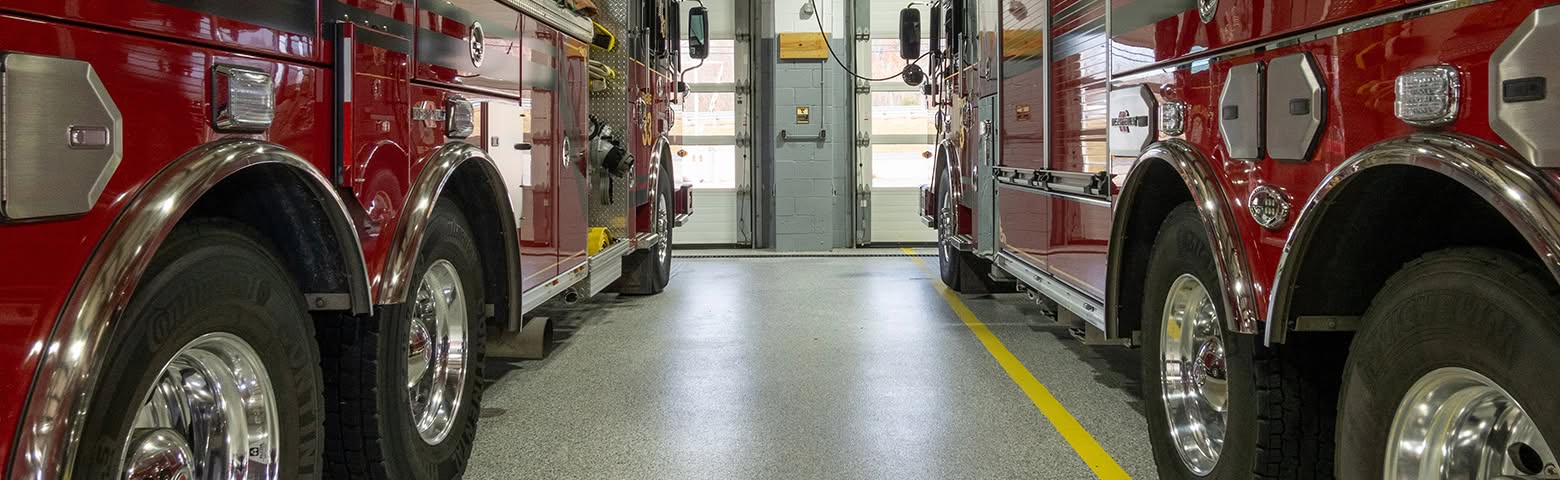
Is your Firehouse or EMS station garage flooring cracking or requiring a new installation? Columbus Epoxy Flooring offers a variety of heavy duty epoxy and urethane-cement flooring systems required to meet the variety of safety and compliance needs that firehouse or fire station epoxy floors face. From the firehouse garage bay to the decontamination room, you can rest at ease knowing your floors are safe, strong, meet all compliance needs all while being beautiful.
Trusted By Companies Small & Large
EMS and Fire Station Epoxy Installation Time Lapse
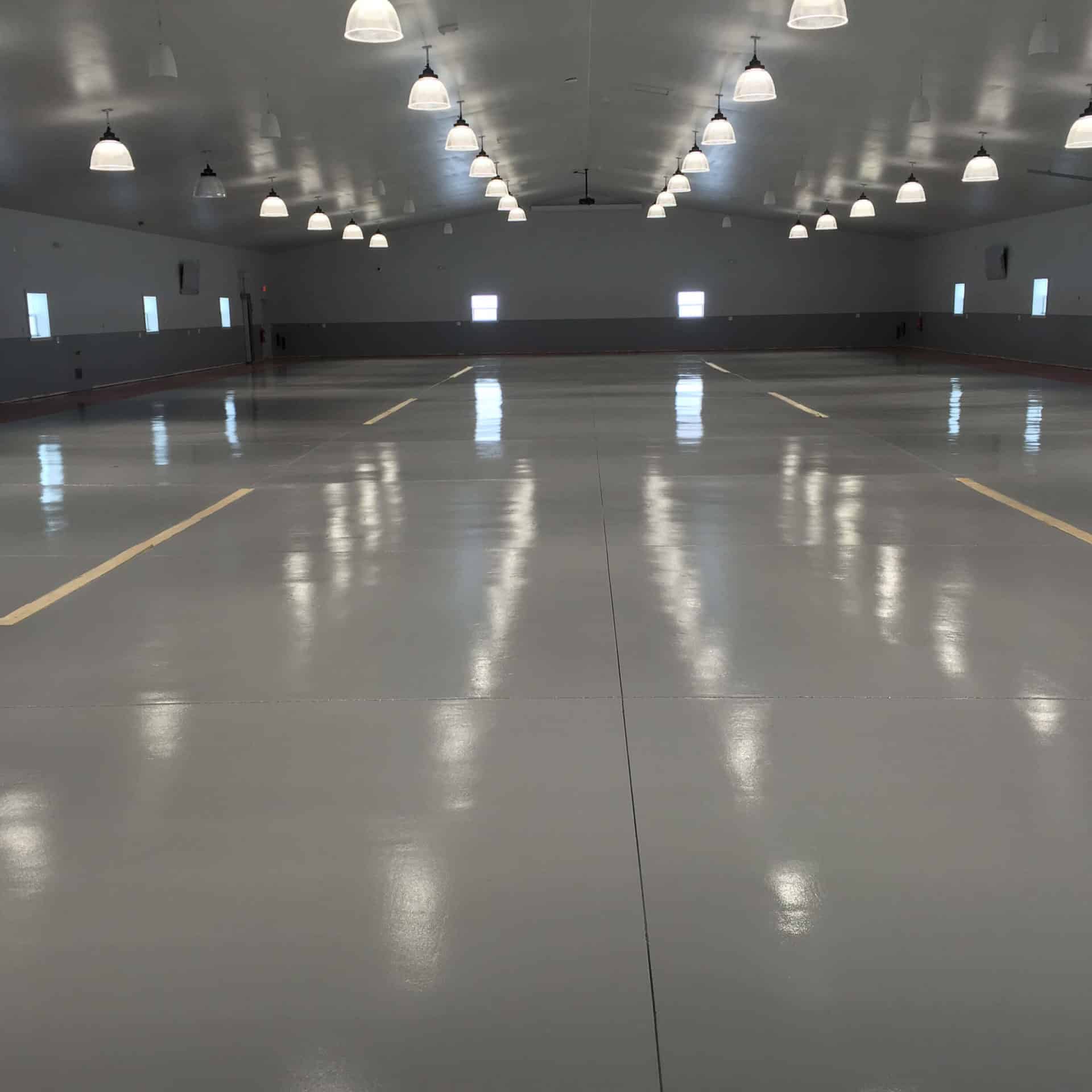
Tough, Seamless Epoxy Floors for Fire Stations, Including Apparatus Bays & EMS Garages
A fire station floor has one of the hardest jobs in your whole city. Every day, 60,000-pound trucks roll in hot, dripping diesel and road brine. Snowmelt and harsh disinfectants pool on the surface, while turnout boots pound the concrete the second the tones drop at 3 a.m. Most standard floor coatings simply aren’t built to handle that kind of environment.
Ours are.
At Columbus Epoxy Flooring, we install heavy-duty, commercial-grade resinous systems designed specifically for the unique demands of fire departments, EMS stations, and public safety buildings throughout Columbus and Central Ohio. We don’t use “box-store” garage kits or thin-mil coatings that lift under pressure. We provide real, seamless industrial flooring installed by a local crew that understands the high stakes of public safety infrastructure.
If you need a quote for your station, reach out to us. We will come out, walk the bays with your team, and put together a straightforward, honest proposal.
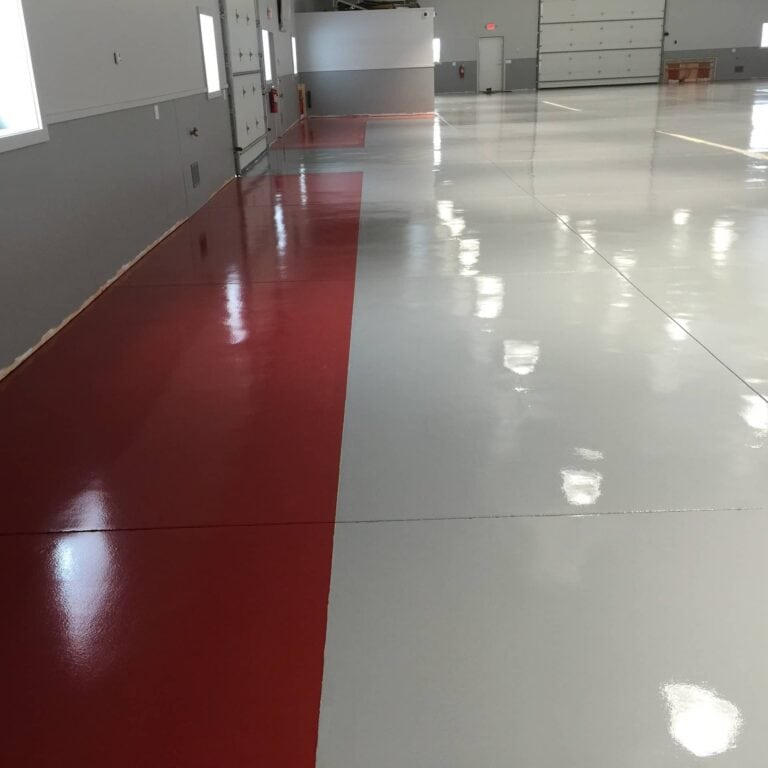
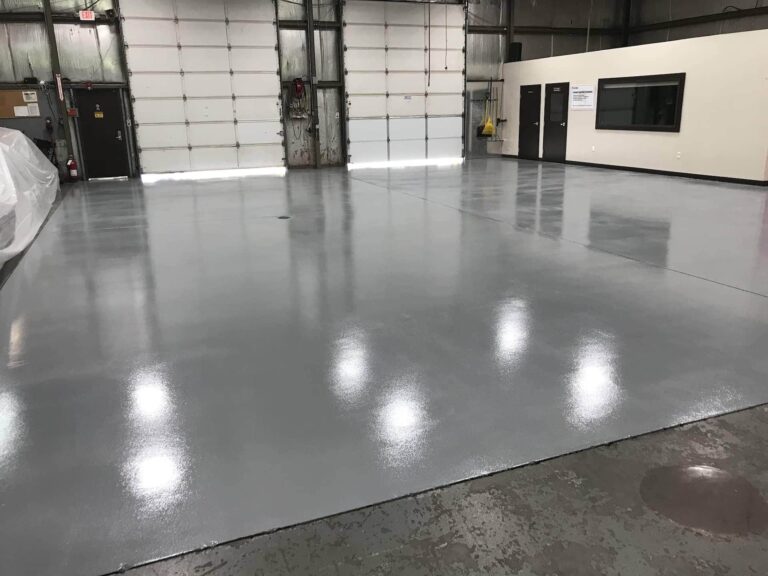
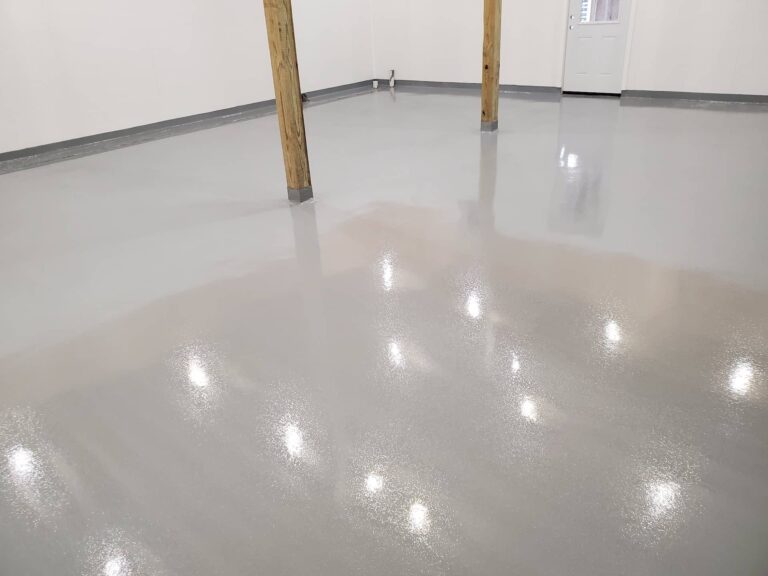
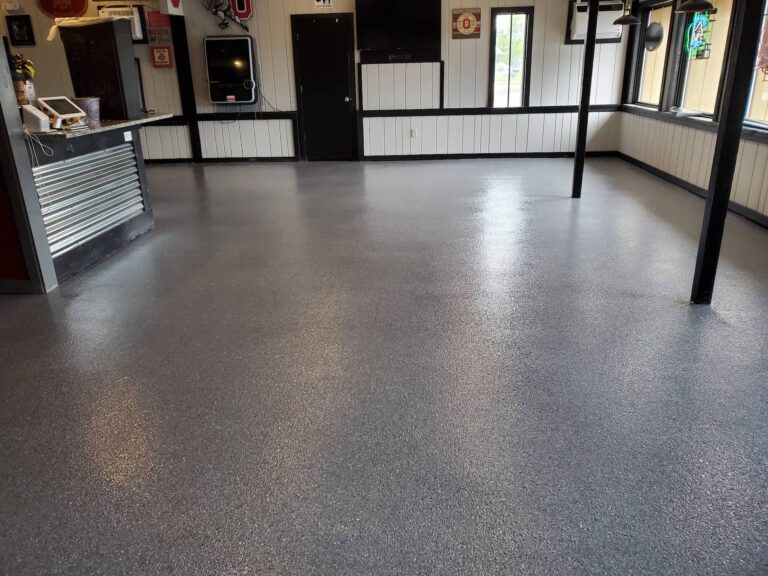
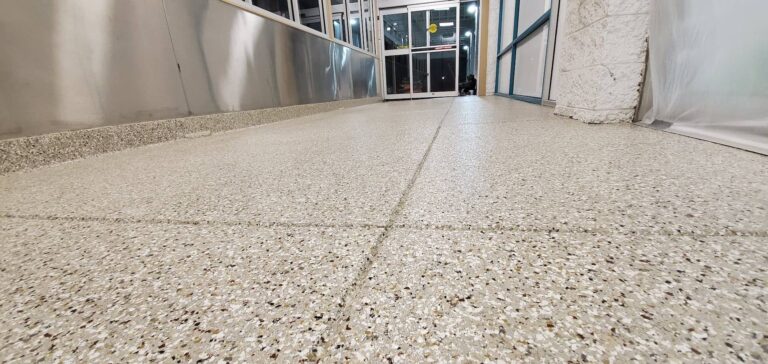
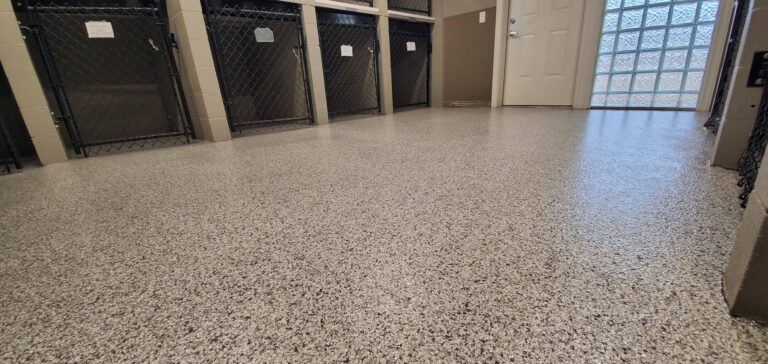
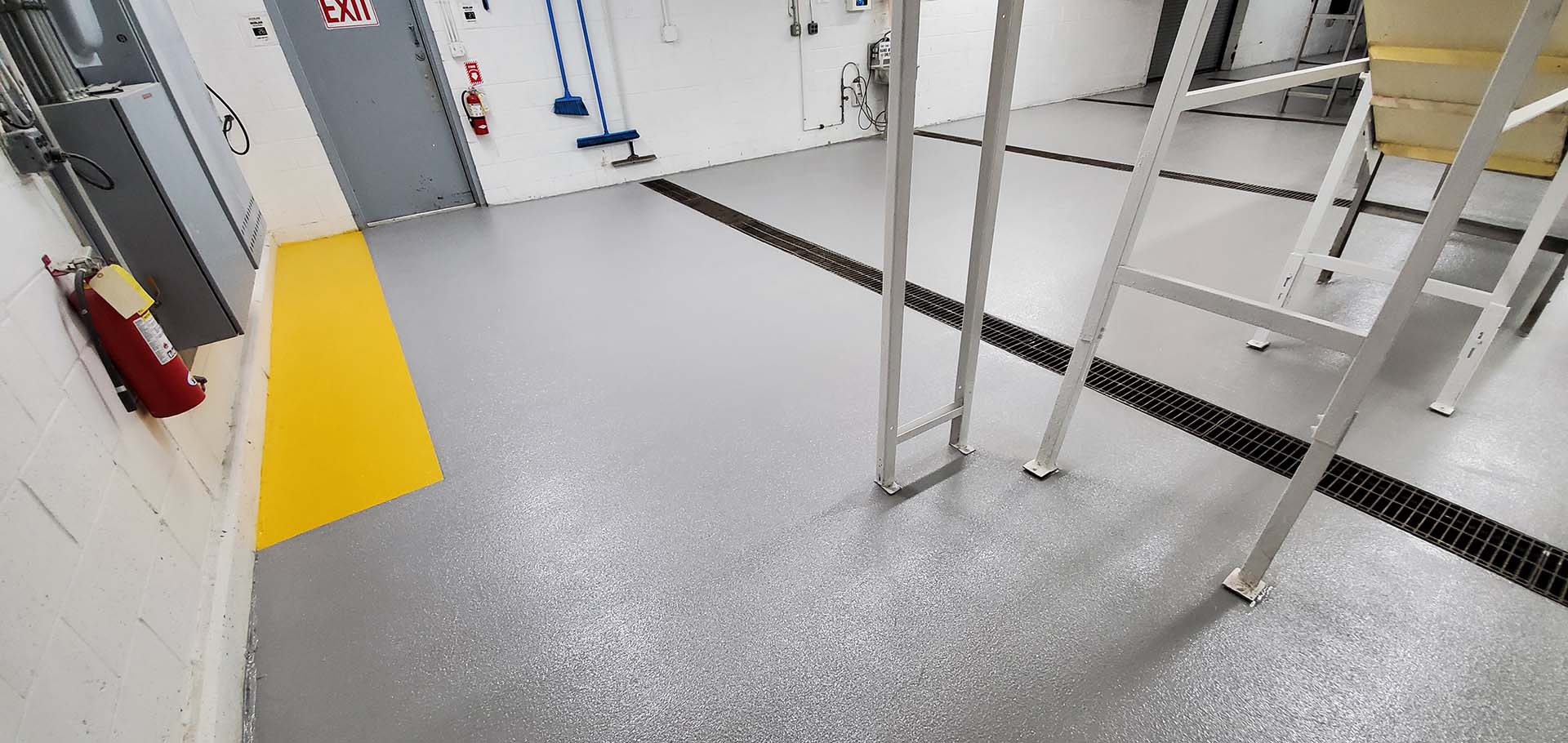
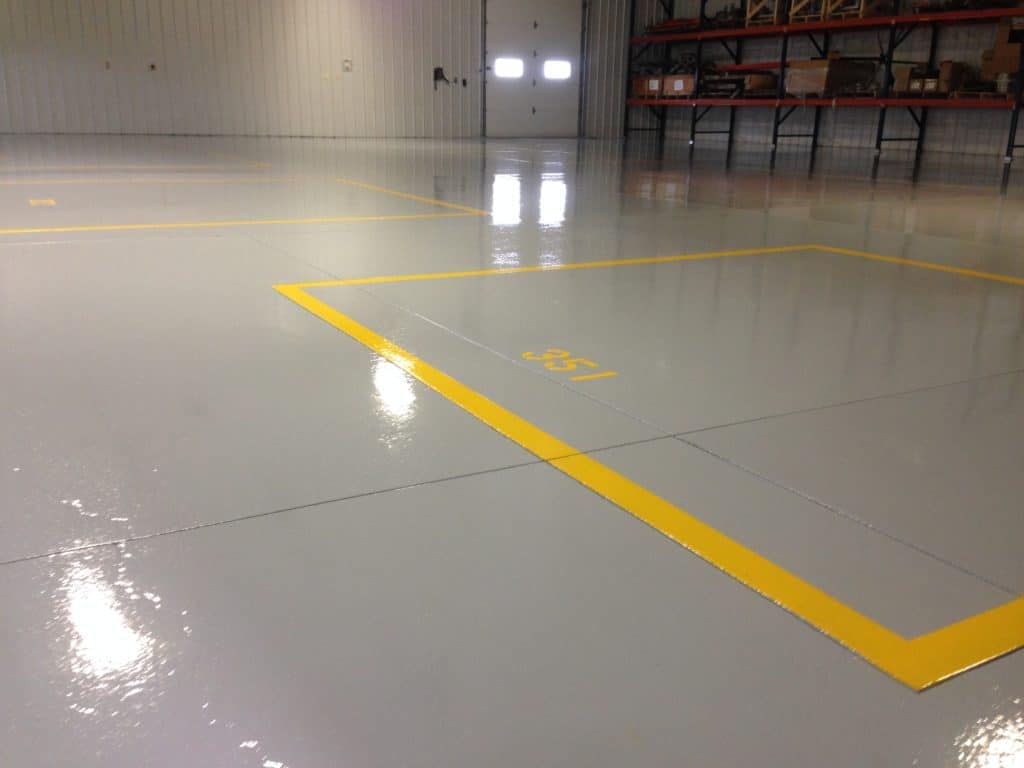
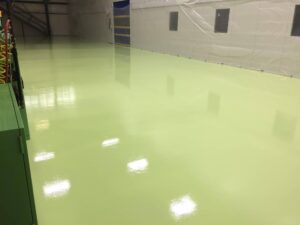
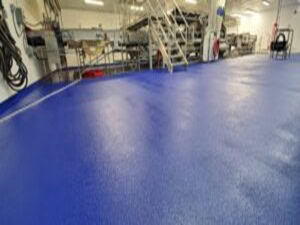
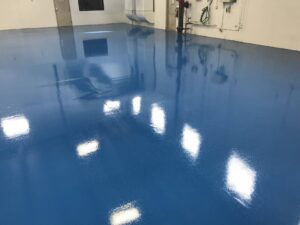
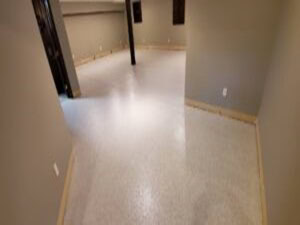
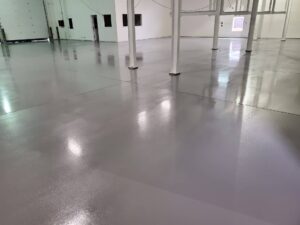
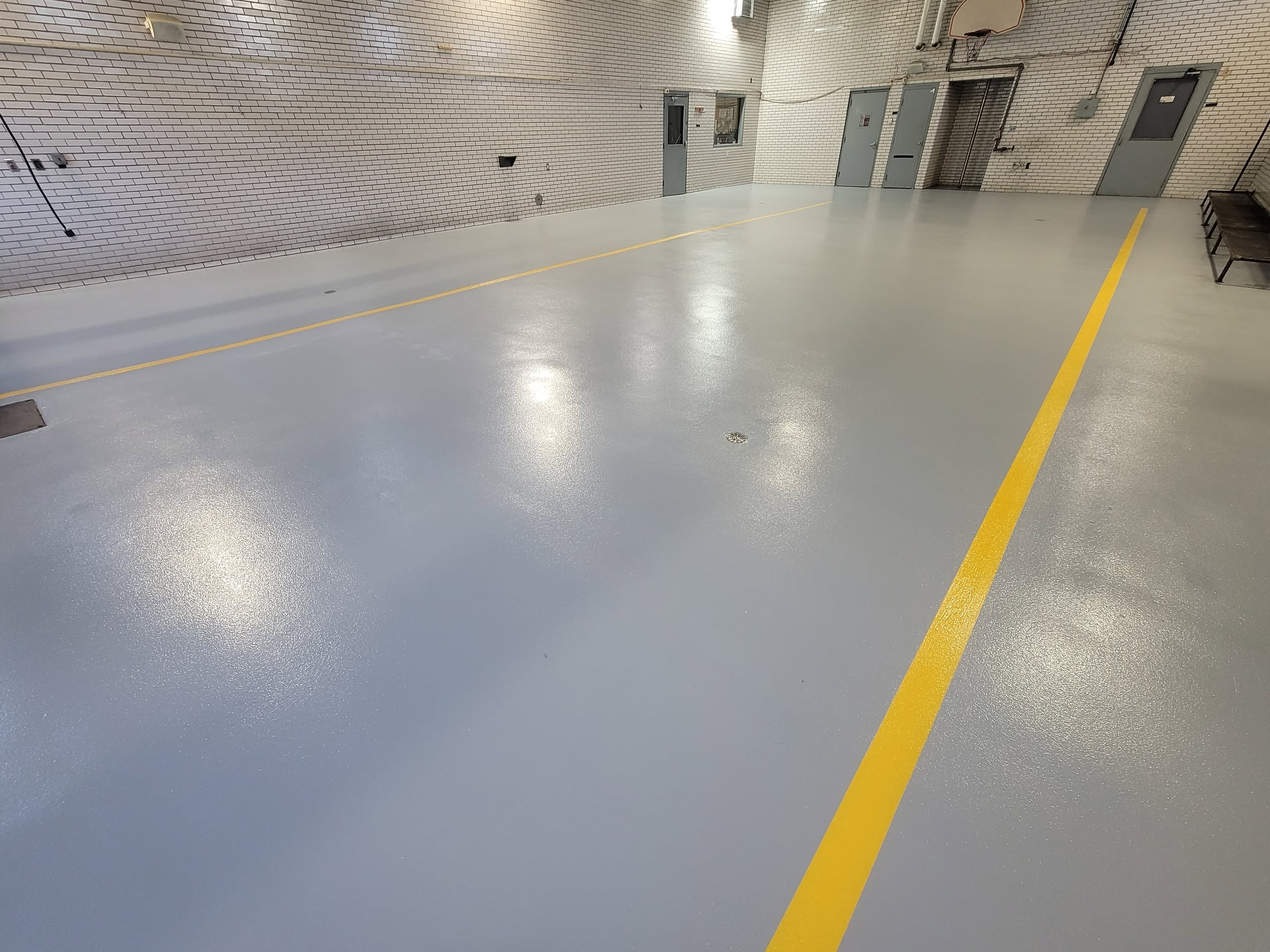
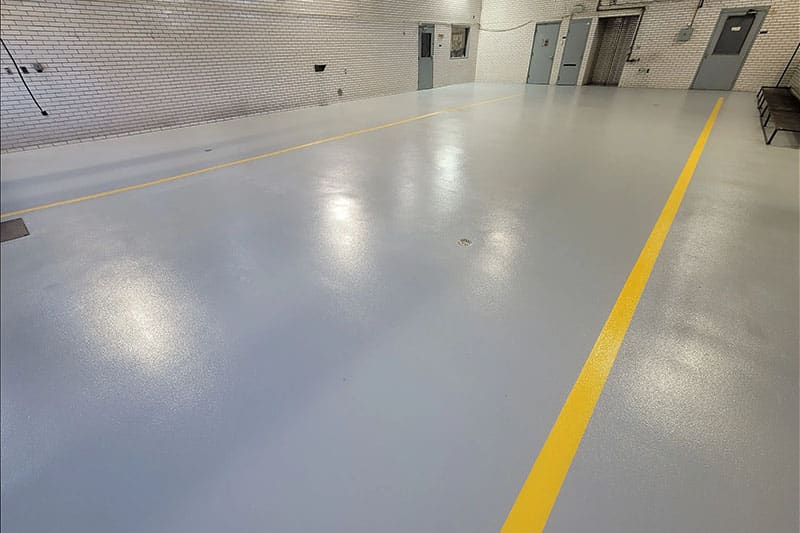
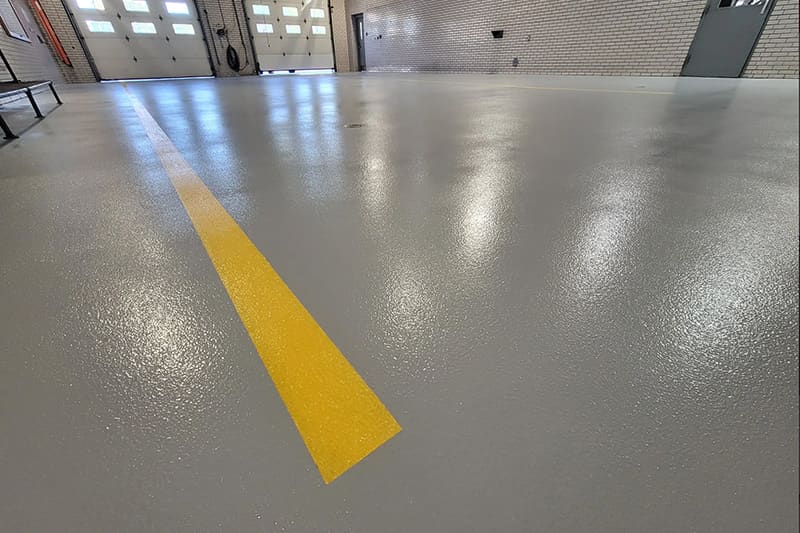
Firehouse and EMS Flooring Contractor Installation Image Gallery
Why a Firehouse Needs More Than a Standard Floor Coating
A firehouse isn’t a typical warehouse, and it certainly isn’t a residential shop. It is a 24/7 mission-critical operation where the floor must withstand constant abuse without failing. Standard concrete coatings fail in these environments because they aren’t engineered for:
- Massive Static Loads: Fire apparatus weighing between 40,000 and 75,000+ pounds park in the exact same spots every single day. This creates immense point-loading pressure that crushes thin-mil coatings.
- Hot Tire Pickup: When hot tires park on a standard epoxy, the cooling rubber contracts and physically peels the coating right off the concrete slab.
- Thermal Shock: When a truck returns to a warm bay after a run on a 10°F January night, the temperature swing is extreme. Our systems are designed to expand and contract with the concrete.
- Aggressive Fluids: Diesel, hydraulic fluid, antifreeze, AFFF foam, and road salt are constant visitors. If a floor is porous, these fluids soak in and degrade the slab from the inside out.
- Daily Washdowns: Constant moisture creates slip hazards and can lead to mold in grout lines. A seamless system eliminates these risks.
- Biohazard & Decon Cleanup: Modern health standards demand a non-porous, sanitary surface that can be aggressively disinfected without losing its finish.
A thin floor coating might look decent for a year, but once the tires grab a corner and it starts to lift, you’re looking at a full tear-out that wasn’t in the budget. We provide the “real fix”—high-build epoxy mortars, troweled quartz, and urethane cement hybrids matched to the specific needs of your station.
The Right System for the Right Part of Your Station
A fire station serves multiple functions, which is why a “one size fits all” approach doesn’t work. We recommend a zoned approach based on the specific activities in each area.
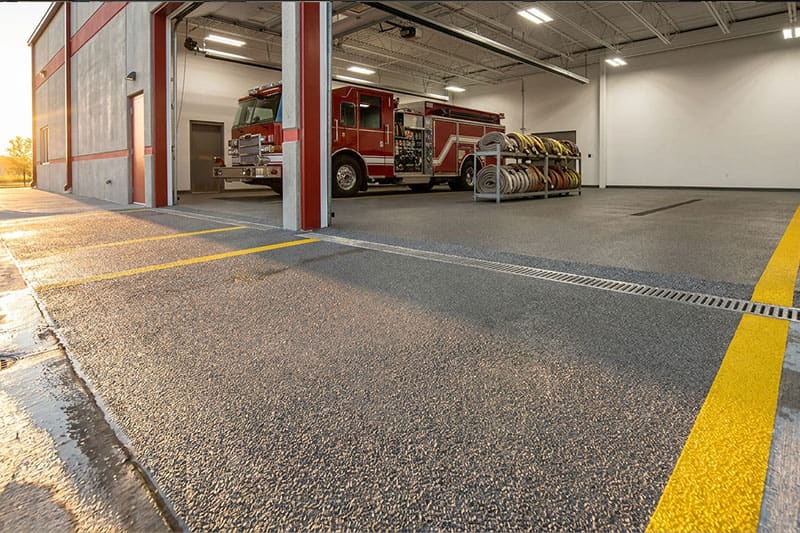
Apparatus Bays: High-Build Epoxy Mortar or Troweled Quartz
For the main drive-in areas, a high-build system (typically 1/4″ thick) is the industry standard. There really isn’t a substitute for this level of durability.
- Composition: It consists of high-performance epoxy resins mixed with graded silica or quartz aggregate to create a structural layer.
- Performance: It offers exceptional impact resistance. If an SCBA bottle or heavy tool drops, the mortar system is thick enough to absorb the impact without breaking or cracking the concrete.
- Longevity: These systems are built to last for 15 to 20+ years, even in the busiest stations.
Living Quarters and Offices: Decorative Flake or Quartz
Kitchens, dayrooms, bunks, and hallways need a mix of style, comfort, and strength.
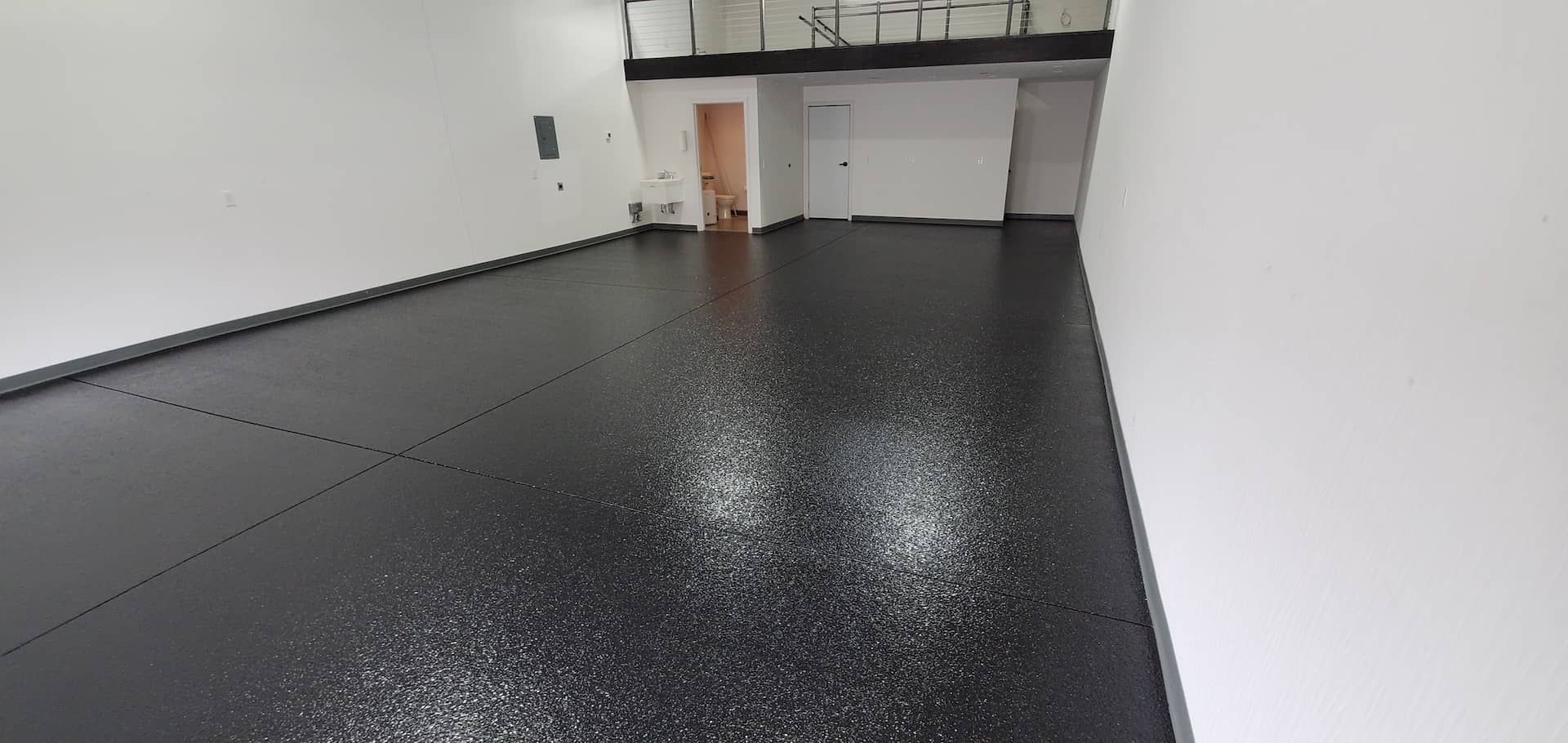
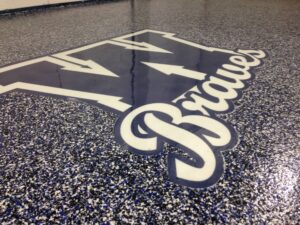
- Decorative Options: We can match custom colors to your department’s branding and embed Maltese crosses, station logos, or bay numbers directly into the floor.
- Maintenance: The seamless design stops dust, dander, and allergens from building up—a common problem with tiled or carpeted areas in firehouses.

Decon and Turnout Gear Rooms: Urethane Cement
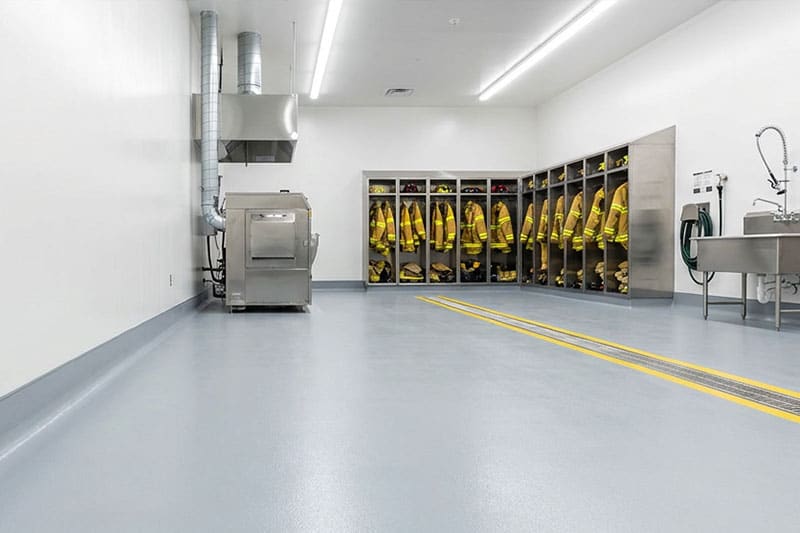
These areas are the “red zones” of the station. They deal with heavy moisture, steam cleaning, and tough chemical cleaners used to remove carcinogens from gear.
- Technology: We use urethane cement combined with an epoxy Novolac top coat here because it is nearly indestructible. It withstands high-temperature washdowns and harsh chemicals without softening, or losing its bond.
- Sanitation: We often install an integral coved base, where the floor curves up 4 to 6 inches on the wall. This design eliminates the 90-degree corners that usually trap bacteria and contaminants.
Ramps, Aprons & Drain Zones: Aggressive Anti-Slip
Anywhere there is a slope or a heavy water pitch, we increase the aggregate broadcast. Wet concrete is a liability; our systems ensure your crew stays on their feet when seconds count.
What You Actually Get
Strength That Lasts
- 10,000+ PSI compressive strength to handle the heaviest ladder trucks.
- Chemical bonds that prevent hot tire pickup for the life of the floor.
- Fills hairline cracks and levels out minor substrate issues during the build process.
A Floor That Makes the Station Proud
- Custom colors and high-definition logos embedded in the resin.
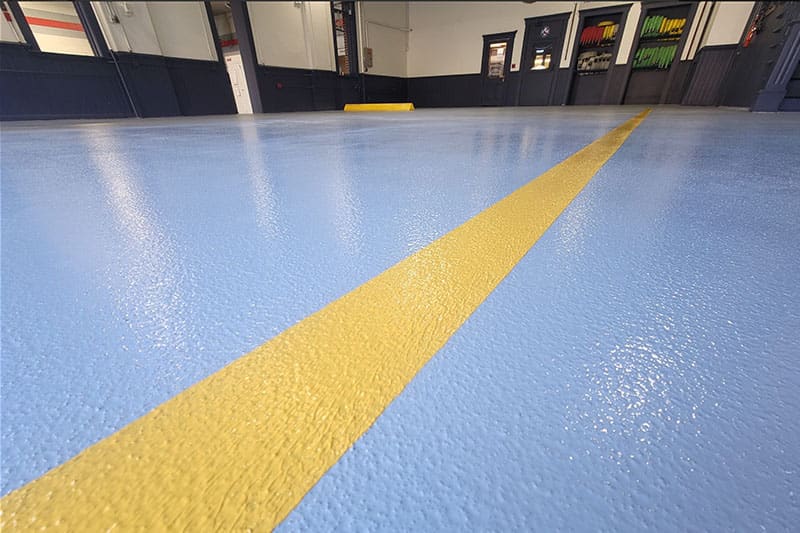
- Safety lanes and bay outlines that are part of the floor, not painted on top to wear off.
- Your choice of high-gloss, satin, or matte finishes.
Slip Resistance & Firefighter Safety
- Customized “grit” profiles for each room (more aggressive in bays, smoother in bunks).
- High coefficient of friction that meets or exceeds ADA and NFPA recommendations.
Chemical & Stain Resistance
- Our topcoats are selected for their high chemical resistance. This keeps fluids—like diesel, oil, and battery acid—on the surface for easy cleanup instead of allowing them to stain or seep into the resin.
Easy to Clean
- 100% seamless design with no grout lines or joints to scrub.
- Keeps the station inspection-ready with minimal labor.
Technical Specifications and Performance Data
When we provide a proposal, it comes with measurable performance data focused on the following metrics to ensure it meets municipal standards:
- Compressive Strength (ASTM D695): 10,000+ PSI.
- Tensile Strength (ASTM D638): 2,000+ PSI.
- Hardness (ASTM D2240): 80-85 Shore D.
- Adhesion (ASTM D4541): 400 PSI (The concrete will break before the epoxy does).
- Compliance: Meets all NFPA, OSHA, and ADA requirements for public safety facilities.
The Installation Process: Why Preparation Matters
A resinous floor relies heavily on how well the substrate is prepared. At Columbus Epoxy Flooring, we dedicate 70% of our time to preparation and 30% to application. If the prep is skipped, the floor fails.

We use planetary diamond grinders or shot-blasters to remove "laitance" (the weak top layer of concrete) and achieve a Concrete Surface Profile (CSP) of 3 or 4. This ensures a strong mechanical bond.
Ohio slabs often have high Moisture Vapor Emission Rates (MVER). We test every slab. If moisture levels are elevated, we apply a moisture-mitigating primer to stop future blistering.

We don’t just "paint over" cracks. We chase them out, fill them with structural epoxy, and treat expansion joints with flexible polyurea to keep the floor seamless while accommodating building movement.

We know the station can't simply shut down. We often work in phases, completing one bay at a time. This allows us to shift apparatus and keep the station running. Most systems can handle foot traffic in 24 hours and heavy vehicle traffic in 48 to 72 hours.
- Mechanical Preparation: We use planetary diamond grinders or shot-blasters to remove “laitance” (the weak top layer of concrete) and achieve a Concrete Surface Profile (CSP) of 3 or 4. This ensures a strong mechanical bond.
- Moisture Testing: Ohio slabs often have high Moisture Vapor Emission Rates (MVER). We test every slab. If moisture levels are elevated, we apply a moisture-mitigating primer to stop future blistering.
- Joint and Crack Repair: We don’t just “paint over” cracks. We chase them out, fill them with structural epoxy, and treat expansion joints with flexible polyurea to keep the floor seamless while accommodating building movement.
- Phased Implementation: We know the station can’t simply shut down. We often work in phases, completing one bay at a time. This allows us to shift apparatus and keep the station running. Most systems can handle foot traffic in 24 hours and heavy vehicle traffic in 48 to 72 hours.

Why Central Ohio Departments Partner with Columbus Epoxy Flooring
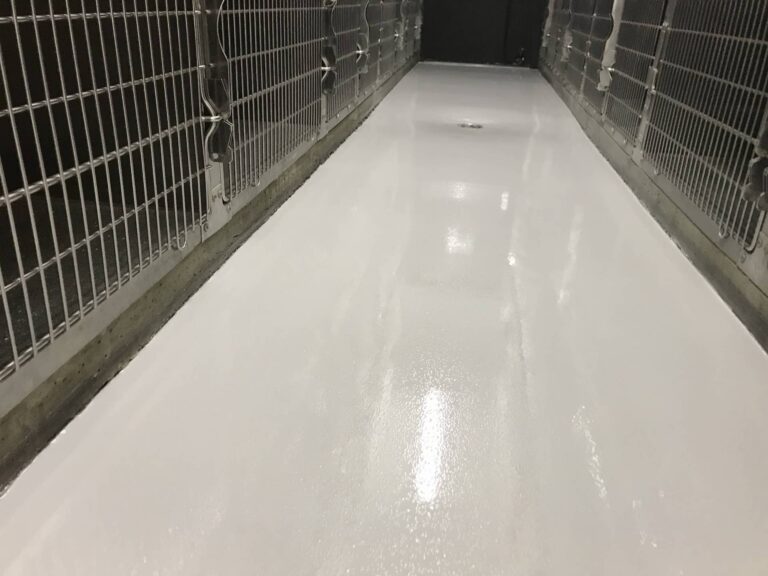
A fire station floor has one of the hardest jobs in your whole city. Every day, 60,000-pound trucks roll in hot, dripping diesel and road brine. Snowmelt and harsh disinfectants pool on the surface, while turnout boots pound the concrete the second the tones drop at 3 a.m. Most standard floor coatings simply aren’t built to handle that kind of environment.
Ours are.
At Columbus Epoxy Flooring, we install heavy-duty, commercial-grade resinous systems designed specifically for the unique demands of fire departments, EMS stations, and public safety buildings throughout Columbus and Central Ohio. We don’t use “box-store” garage kits or thin-mil coatings that lift under pressure. We provide real, seamless industrial flooring installed by a local crew that understands the high stakes of public safety infrastructure.
If you need a quote for your station, reach out to us. We will come out, walk the bays with your team, and put together a straightforward, honest proposal.
Serving Fire Departments Across Central Ohio
We offer installation services for fire departments and EMS agencies throughout Franklin, Delaware, Licking, and Fairfield counties, including Dublin, Westerville, Hilliard, Grove City, New Albany, Powell, Reynoldsburg, and the Greater Columbus area.
Ready to Talk About Your Station?
Industrial Strength, Local Service, Engineered for the Long Haul.
Your crew runs toward the stuff everyone else runs from. The least your floor can do is show up for them every shift.
To schedule an on-site evaluation and receive a technical proposal for your facility, please contact us, request a consult or call our office directly. We will assess your concrete thoroughly and provide an honest recommendation based on your station’s specific needs.
Frequently Asked Questions
How long will the installation take?
A standard apparatus bay usually takes 3 to 5 days from arrival to completion, depending on the chosen system and the concrete’s condition.
Can you match our specific department colors?
Yes. We can create custom-pigmented resins or custom flake blends to match your branding. We can also embed high-definition logos and Maltese crosses.
How do we clean the floor?
The floor is non-porous, making maintenance easy. Generally, you just need a neutral cleaner along with a walk-behind scrubber or a soft-bristle broom. No waxing or stripping is ever necessary.
Is the floor slippery when wet?
We customize the grit or aggregate broadcast in every system. In apparatus bays, we use a more aggressive slip-resistance profile for firefighter safety. In living quarters, we apply a finer texture that’s easier on bare feet while still providing traction.