




Commercial Epoxy Flooring Solutions for Central Ohio Parks & Recreation Facilities
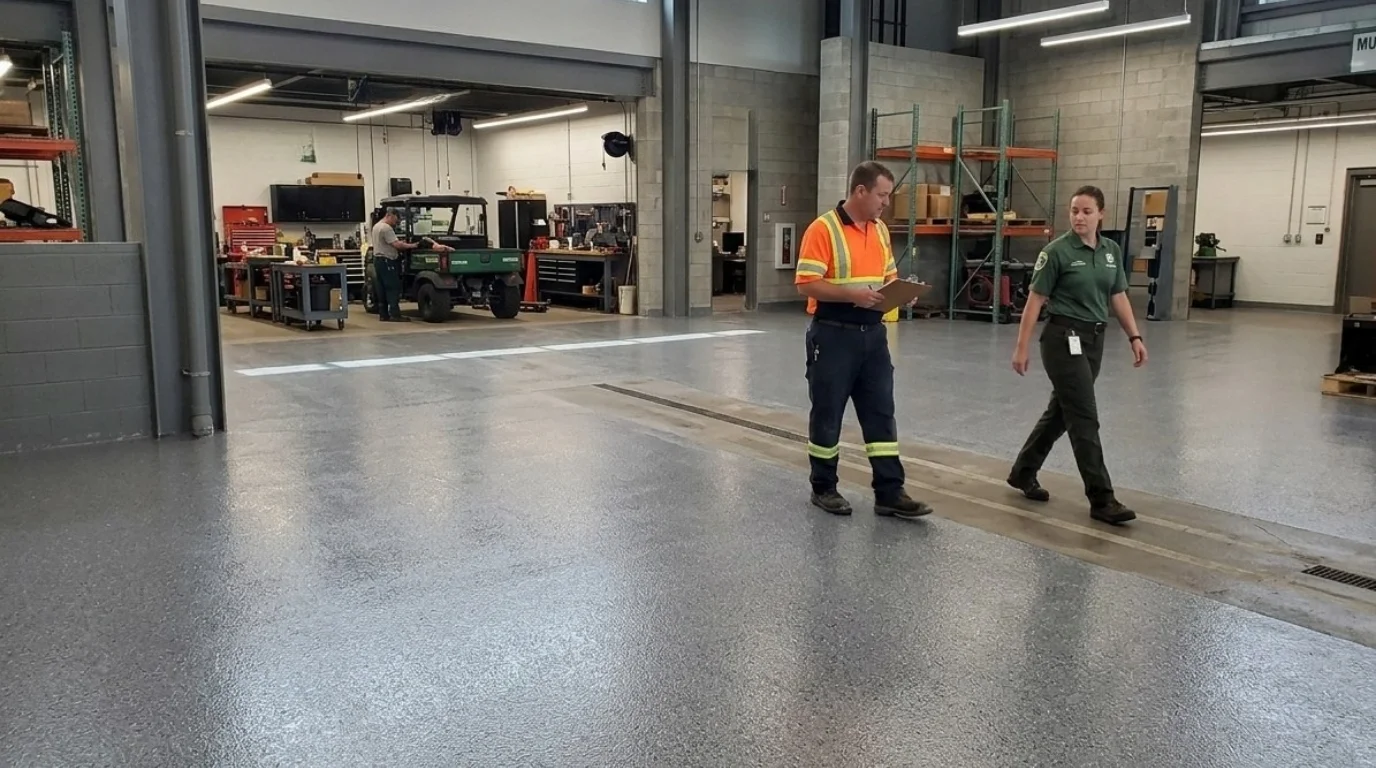
Public parks and recreation facilities endure operational demands unlike virtually any standard commercial building. Splash pads and aquatic centers experience non-stop water immersion; locker rooms endure daily high-pressure washdowns; concession kitchens handle constant hot grease, frying, and acidic food spills; and multi-purpose halls absorb the continuous impact of heavy equipment carts, bleachers, folding chairs, and thousands of foot-traffic visitors each week.
Standard sealed concrete, vinyl composition tile (VCT), and retail paint-grade coatings lack the chemical durability and strength required for these severe service environments. When low-grade coatings inevitably degrade, the consequences directly impact municipal operations: severe moisture delamination, dangerous slip-and-fall liabilities, unscheduled mid-season closures, and unexpected maintenance line items that strain municipal budgets.
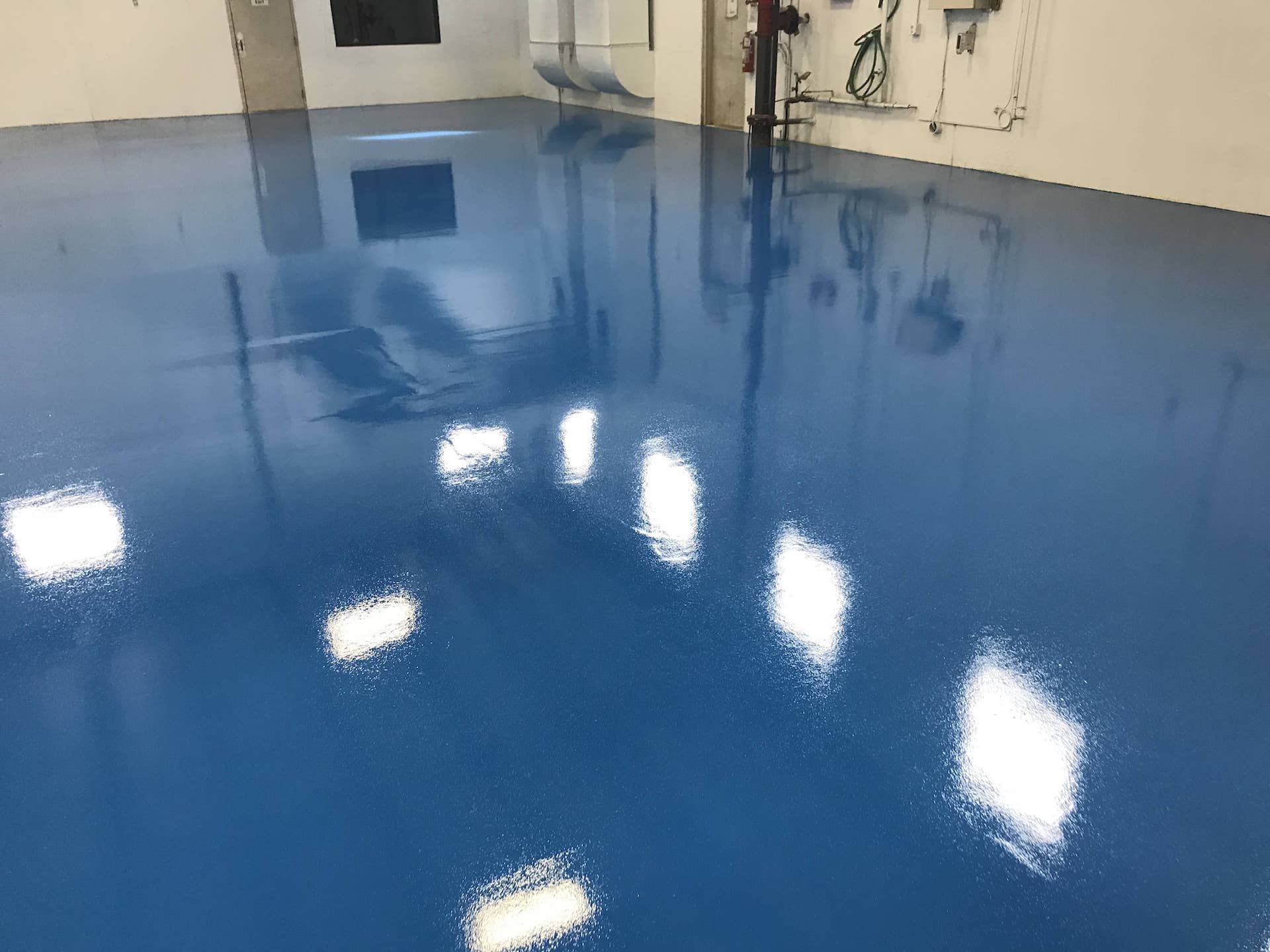
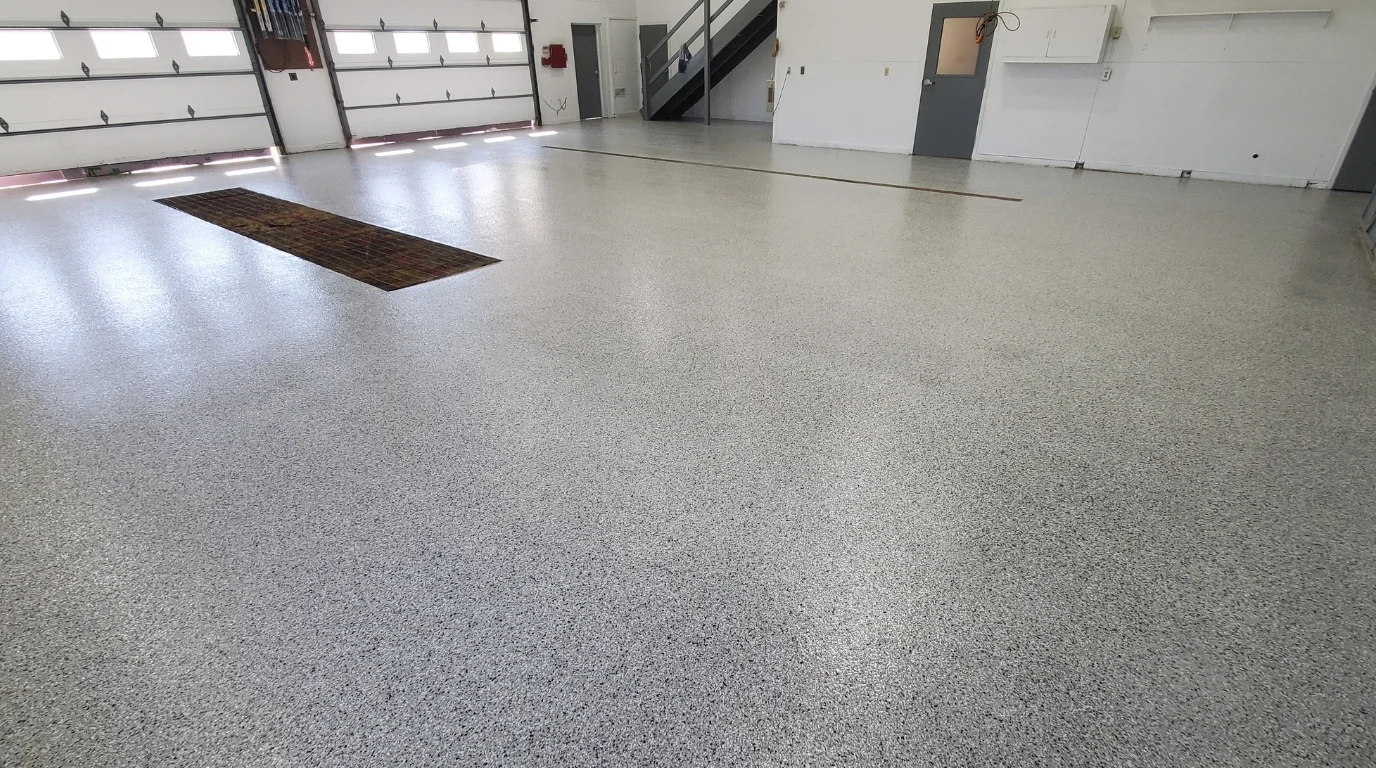
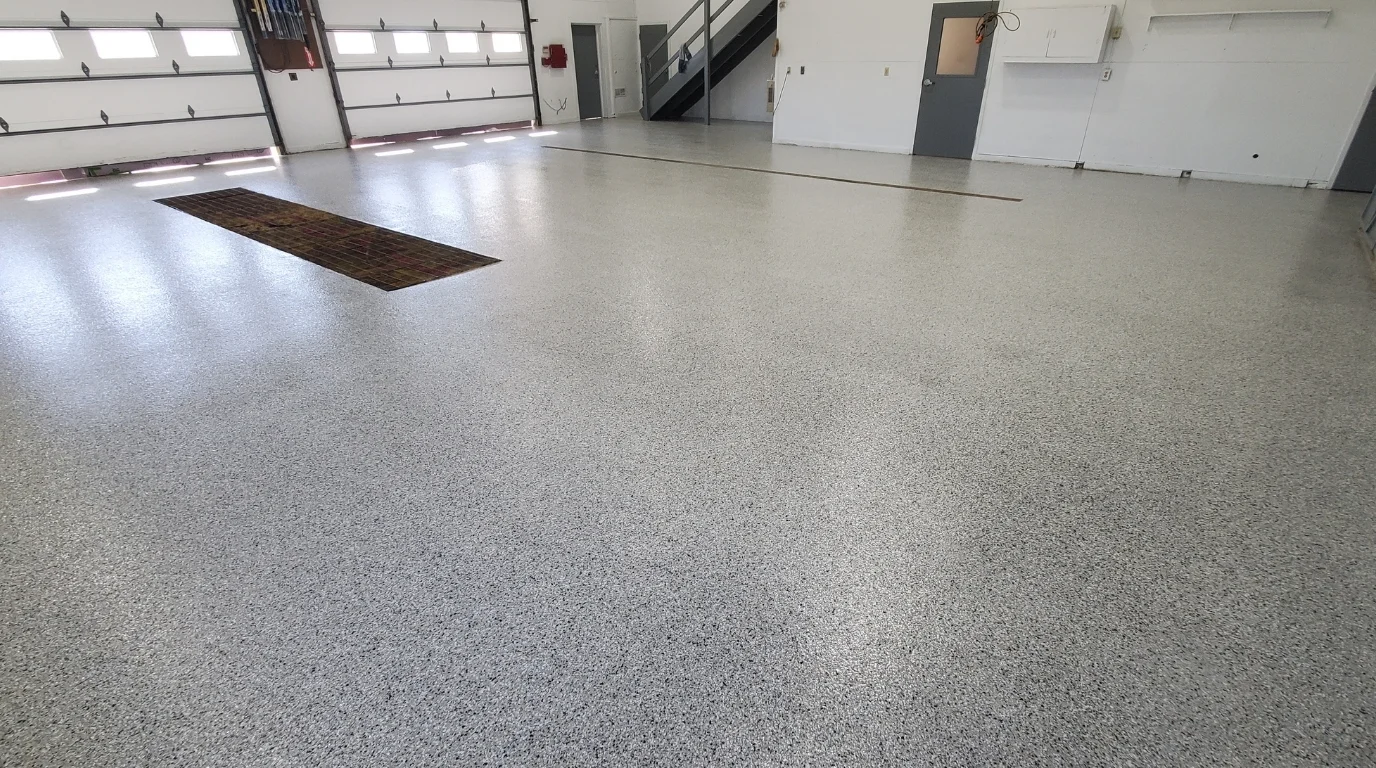
Columbus Epoxy Flooring installs seamless, heavy-duty epoxy, polyaspartic, and urethane mortar flooring systems engineered specifically for municipal and public recreation facilities across Central Ohio. From community centers and aquatic complexes to indoor sports facilities and municipal parks department buildings, every system we install is custom-engineered for its specific environment—balancing slip resistance, chemical durability, thermal shock stability, and impact resistance.
The Hidden Causes & Costs of Floor Failure in Municipal Buildings
- Substrate Moisture Vapor Transmission: Concrete slabs in pool houses, splash pad restrooms, and ground-level locker rooms retain high levels of subsurface moisture. Hydrostatic pressure forces thin coatings and tile adhesives to blister, pinhole, and delaminate away from the concrete matrix.
- Heavy, Continuous Mechanical Abrasion: High volume foot traffic—often wearing wet footwear, turf shoes, or cleats—rapidly strips paint-grade finishes, exposing bare aggregate to water penetration and structural wear within a single budget cycle.
- Chemical Degradation from Daily Sanitization: Municipal hygiene protocols require aggressive daily cleaning with industrial bleach, quaternary disinfectants, and harsh sanitizers. Low-grade floor coatings break down under continuous chemical exposure, resulting in chalking, yellowing, discoloration, and concrete pitting that fail health inspections.
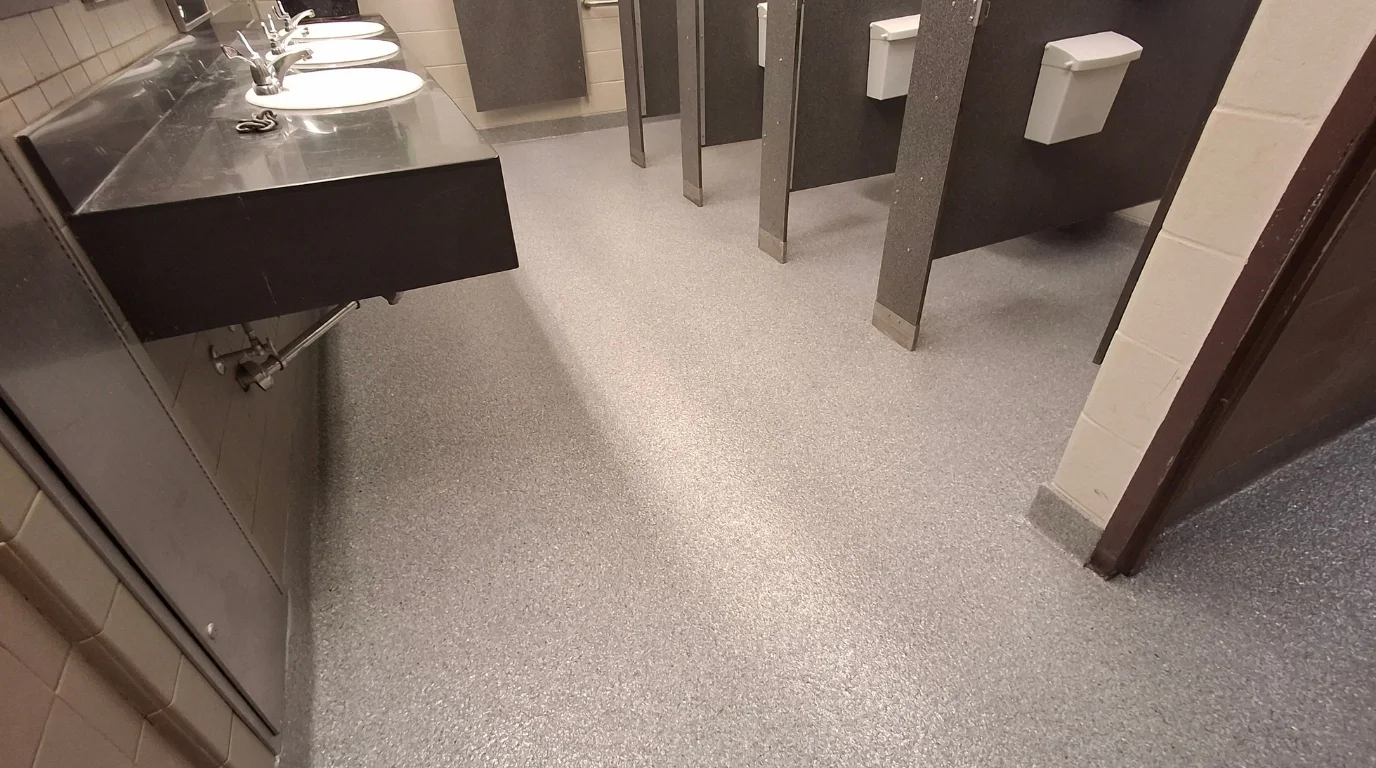
- Microbial Accumulation in Grout and Seams: Traditional tile installations rely on porous grout lines that collect body oils, stagnant water, grease, and bacteria. This creates recurring foul odors, health compliance issues, and intensive manual scrubbing routines for maintenance staff.
- Elevated Slip-and-Fall Liability: Worn tile and smooth coatings in wet zones represent a major liability risk for municipal parks departments. Proper surface profile texture is essential to ensure public safety and meet ADA guidelines.
- Unplanned Facility Closures: Coating failures force emergency localized repairs, disrupting public access, youth sports leagues, community programming, and municipal schedules.
High-Performance Resinous Flooring Systems Overview
Because no single floor coating meets the demands of every room in a recreation facility, we specify tailored resinous systems based on mechanical load, thermal exposure, chemical contact, and required traction.
| Resinous System Type | Target Application Areas | Primary Performance Features | Traffic Readiness |
|---|---|---|---|
| Seamless Self-Leveling Epoxy | Lobbies, Restrooms, Corridors, Offices | High-build, non-porous, seamless sanitary surface | 24 Hours (Foot Traffic) |
| Slip-Resistant Quartz Broadcast | Pool Decks, Splash Pads, Shower Rooms | High-traction textured finish, ADA-compliant wet safety | 24–48 Hours (Foot Traffic) |
| Heavy-Duty Urethane Mortar | Concession Kitchens, Wash-Down Bays | Extreme thermal shock, grease, hot oil, and impact resistance | 48–72 Hours (Vehicle/Heavy Equipment) |
| Decorative Flake Epoxy & Polyaspartic | Fitness Centers, Multi-Purpose Gyms, Meeting Halls | Highly aesthetic, impact-resistant, low-maintenance surface | 24 Hours (Foot Traffic) |
Area-Specific System Specifications
Wet & High-Moisture Zones: Pool Decks, Splash Pads, and Showers
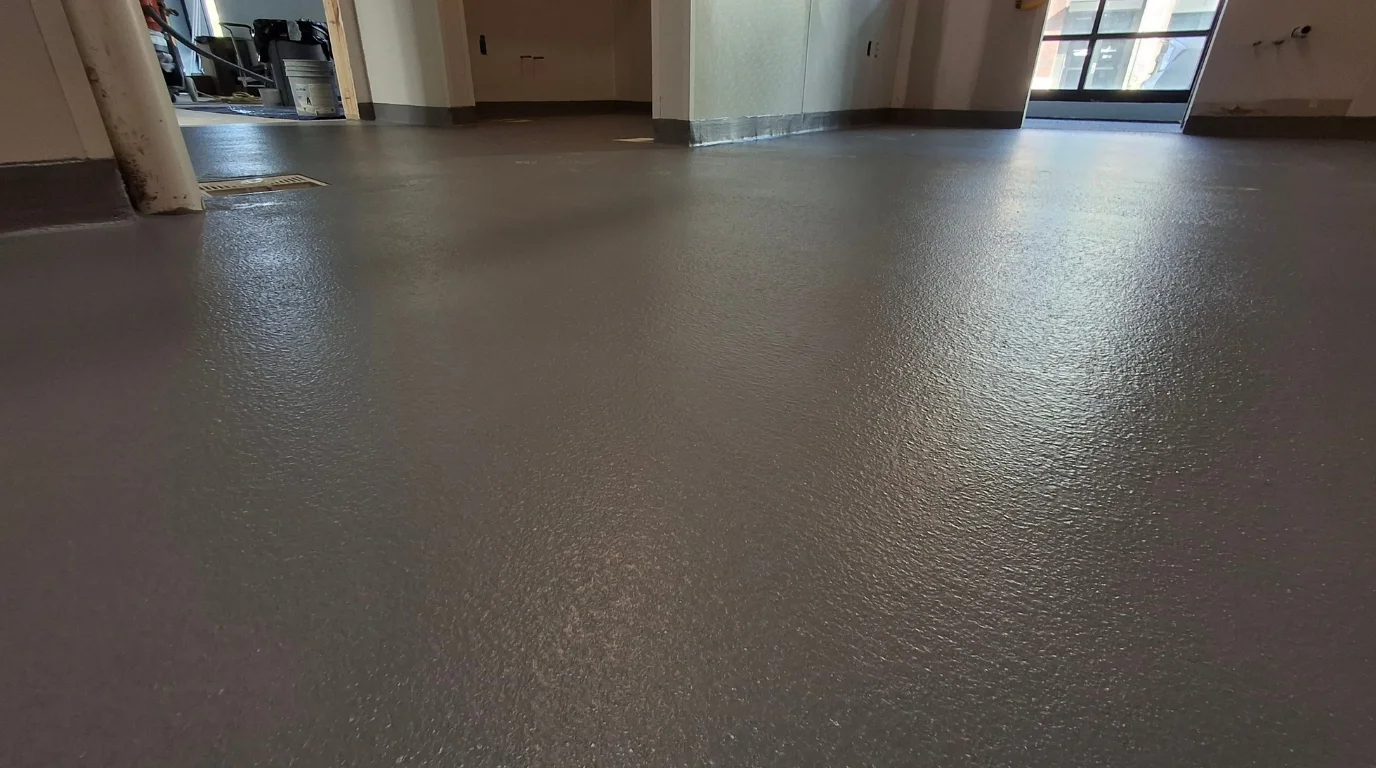
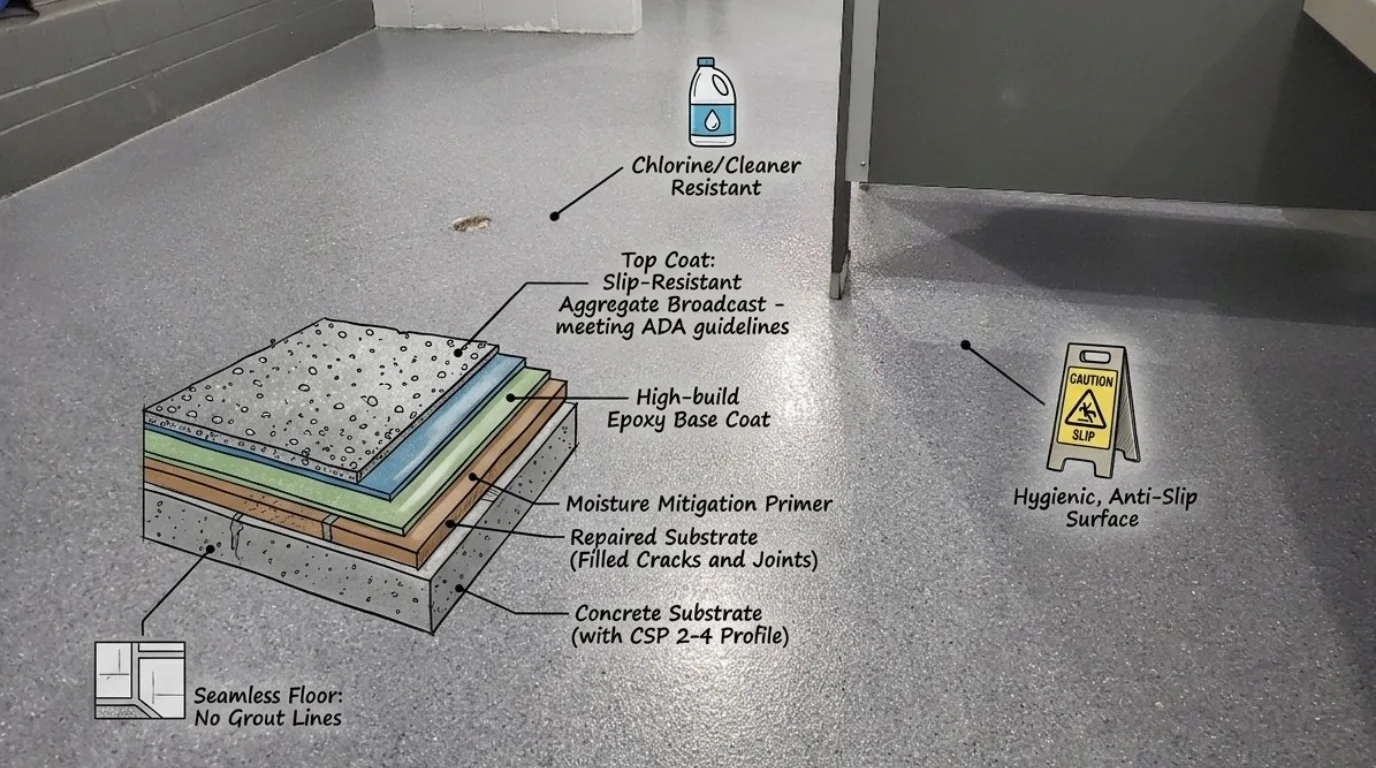
High-moisture areas require aggregate-reinforced topcoat systems to maximize wet-surface traction without compromising cleanability. We broadcast specialized quartz sand or aluminum oxide into high-solids epoxy and polyaspartic coatings. This creates a resilient, textured surface that meets ADA slip-resistance guidance while resisting constant exposure to pool chemicals, chlorine, UV radiation, standing water, and body oils.
Hygienic Facilities: Locker Rooms, Restrooms, and Changing Areas
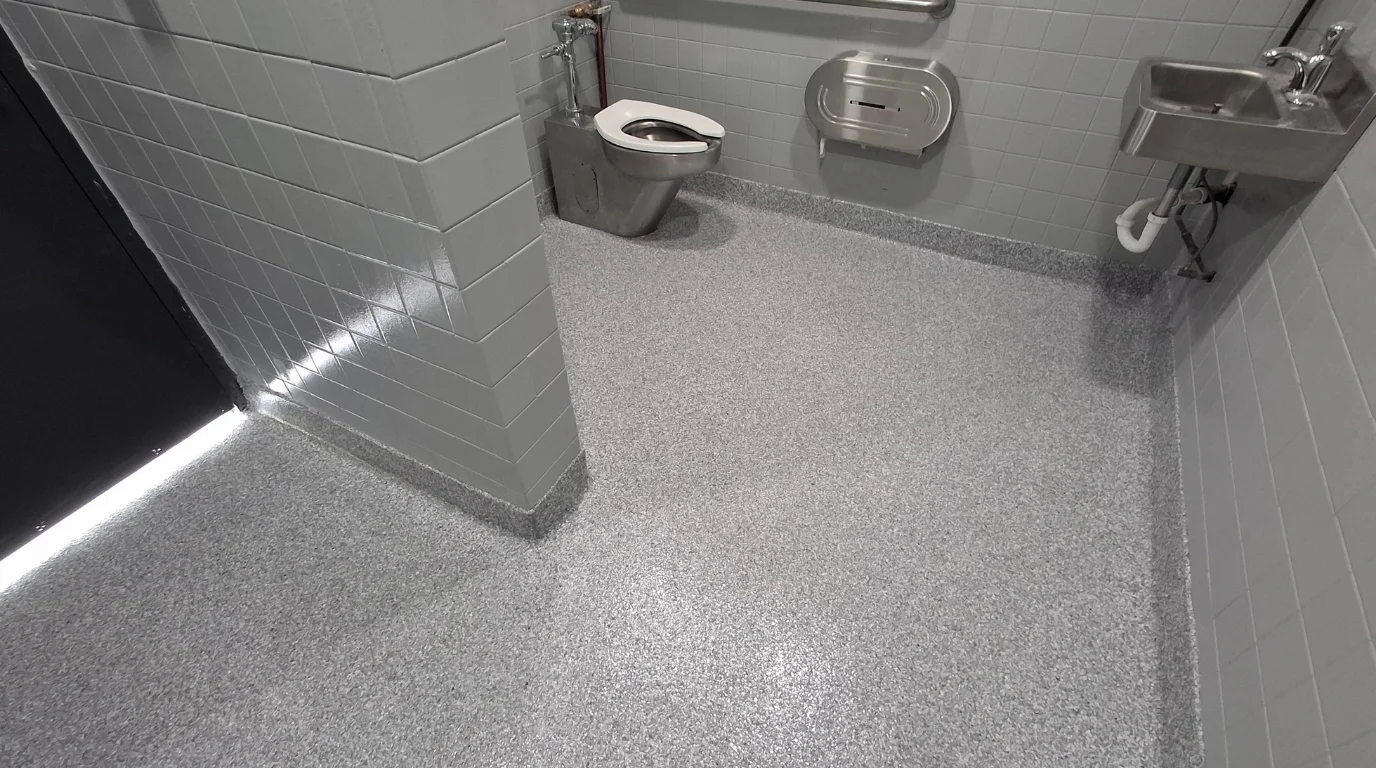
Grout lines in traditional quarry or ceramic tile harbor mold, mildew, and odor-causing bacteria. Our seamless self-leveling epoxy systems create a continuous, non-porous barrier that prevents moisture penetration. By integrating continuous integral cove bases that extend 4 to 6 inches up the wall, we eliminate lower wall joints, allowing facilities staff to execute total room washdowns quickly and efficiently.
Severe Service Environments: Concession Kitchens & Mechanical Rooms
Food prep areas experience extreme thermal shock when hot grease, boiling liquids, or steam washdowns hit cold floors. Standard epoxy can crack or delaminate under these rapid thermal expansion cycles. We install heavy-duty, 3/16-inch to 1/4-inch urethane mortar systems engineered to withstand thermal shock from -40 degrees Fahrenheit to 240 degrees Fahrenheit, alongside exceptional resistance to hot frying oils, organic food acids, and heavy kitchen equipment movement.
Surface Preparation & Professional Installation Process
A high-performance commercial coating is only as durable as the concrete bond beneath it. Our certified installation teams follow rigorous surface preparation standards identical to those used in industrial manufacturing and healthcare settings, scaled to fit your facility’s operational schedule.
1. Mechanical Concrete Profiling: We utilize planetary diamond grinders and dust-controlled shot blasters to strip coatings, open concrete pores, and establish a Concrete Surface Profile (CSP) of 2 to 4 for permanent chemical and mechanical adhesion.
2. Moisture Vapor Testing & Mitigation: Slabs situated near pools, water tables, or on-grade locations are tested for Moisture Vapor Emission Rates (MVER) and Relative Humidity (RH). Slabs exceeding threshold levels receive a 100% solids epoxy moisture mitigation primer to block hydrostatic pressure.
3. Joint Repair & Structural Patching: Spalls, cracks, and deteriorating control joints are routed clean and injected with semi-rigid polyurea or structural epoxy fillers to restore slab integrity and prevent joint telegraphing through the final floor system.
4. Precision Layering & Aggregate Broadcast: System base coats, aggregate broadcasts (quartz or decorative flake), and protective topcoats (polyaspartic or polyurethane) are applied within strict recoat windows to form a solid chemical bond.
5. Phased & Off-Hours Execution: To keep public programming uninterrupted, work can be scheduled in phases, during evening/weekend hours, or during seasonal facility maintenance shutdowns.
Why Central Ohio Municipalities Partner with Columbus Epoxy Flooring
Columbus Epoxy Flooring delivers dependable, commercial-grade resinous flooring solutions tailored to municipal procurement guidelines, budget cycles, and schedule constraints. We proudly serve public entities throughout Central Ohio:
- Franklin County: Columbus, Dublin, Hilliard, Westerville, Worthington, Upper Arlington, Grove City
- Delaware County: Delaware, Powell, New Albany, Lewis Center
- Licking & Fairfield Counties: Newark, Pataskala, Pickerington, Lancaster
Every project proposal includes a detailed technical data sheet (TDS), Safety Data Sheets (SDS), written performance warranties, and submittals formatted to streamline public bid and RFP requirements. Our crews are fully trained in prevailing wage compliance, municipal safety standards, and commercial facility protocols.
Request Your Facility Evaluation
To evaluate your cleanroom, compounding room, or laboratory flooring requirements, contact Columbus Epoxy Flooring today at 614-348-3184 or request a technical site walk with one of our specialists.
Frequently Asked Questions
Can our recreation facility stay operational during the installation process?
Yes. We frequently execute projects in phases—closing off individual bays, locker rooms, or wings—or schedule work during off-hours, overnight shifts, and seasonal shutdown windows so public programs remain active.
How do your flooring systems satisfy municipal safety and ADA requirements?
Our wet-area systems incorporate customizable broadcasts of quartz or aluminum oxide aggregates into high-solids topcoats. This provides adjustable coefficient of friction (COF) levels that align with ADA traction recommendations for public wet areas.
Do you provide submittals required for public bids and municipal RFPs?
Yes. We regularly supply technical data sheets, surface prep specs, past municipal project references, proof of insurance, and formal warranty submittals to fulfill local procurement requirements.
What is the expected cure time before foot traffic and heavy equipment can resume?
Most standard epoxy and polyaspartic systems permit light foot traffic within 24 hours of topcoat application. Full mechanical cure and heavy equipment loading, such as maintenance carts or bleachers, typically require 48 to 72 hours, depending on system chemistry and site ambient conditions.
How resistant are these coatings to aggressive daily disinfectants?
Our UV-stable polyaspartic and aliphatic polyurethane topcoats are chemically non-reactive and engineered to resist yellowing, staining, and softening under daily cleaning routines using commercial bleach, hydrogen peroxide, and quaternary ammonium compounds.
Do you offer static-control (ESD) options?
Yes. We install conductive and static-dissipative epoxy systems connected directly to your building’s electrical grounding system to safely dissipate static electricity.
How long does installation take, and can our lab remain open?
Installation timelines depend on the room size and surface preparation requirements, but most projects take 3 to 4 days. We can complete the work in phases to keep adjacent rooms operational, and fast-cure systems allow light foot traffic within 12 to 24 hours after installation.
Will daily disinfectant cleaning damage or yellow the floor finish?
No. We use high-performance topcoats that resist yellowing and withstand daily cleaning with isopropyl alcohol, hydrogen peroxide, and sporicidal disinfectants.