


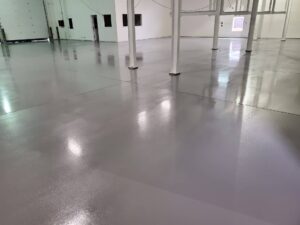
Battery Charging Station Epoxy Flooring
Trusted By Companies Small & Large
Trusted By Companies Small & Large
Industrial Concrete Protection: Why Novolac Epoxy is Mandatory for Battery Stations
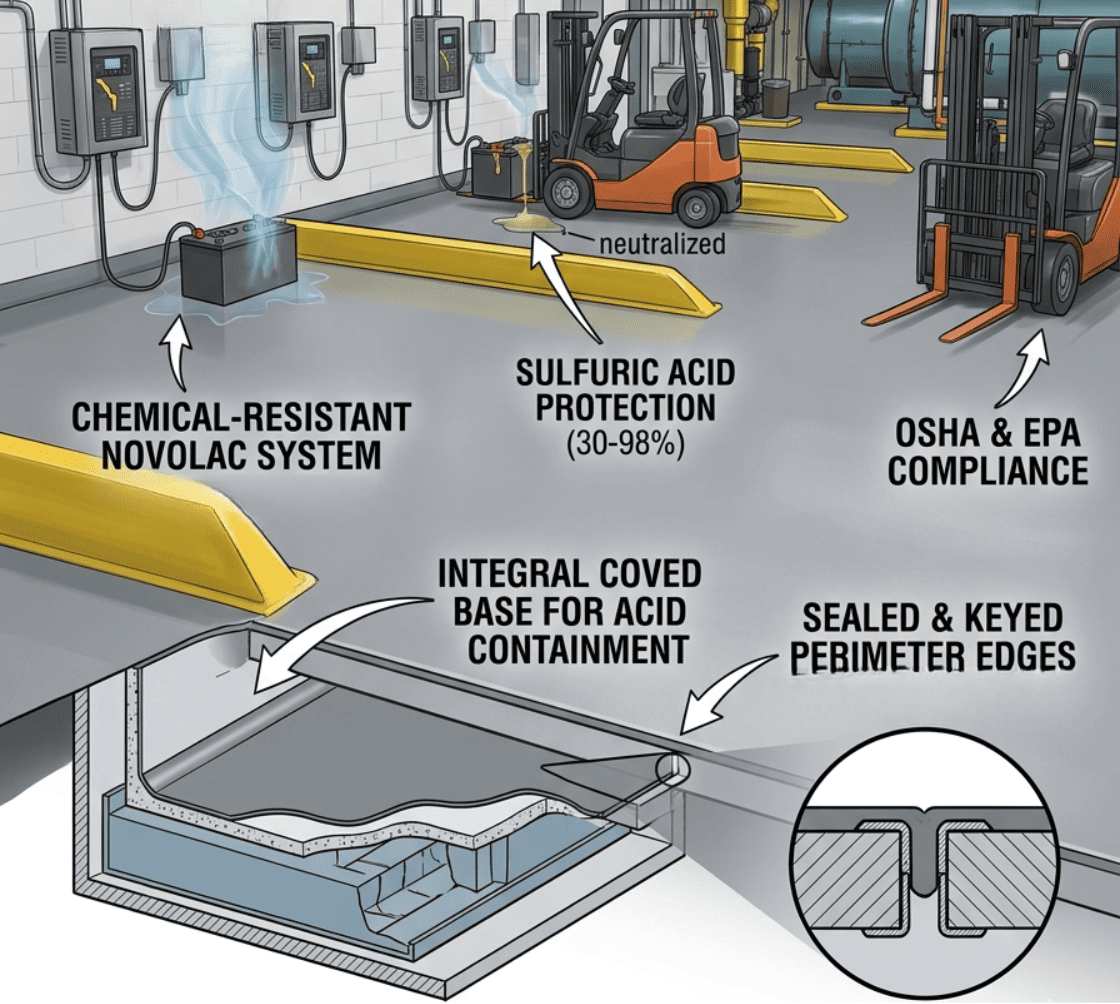
Tough, Chemical-Resistant Epoxy Floors for Forklift Battery Rooms & Charging Stations
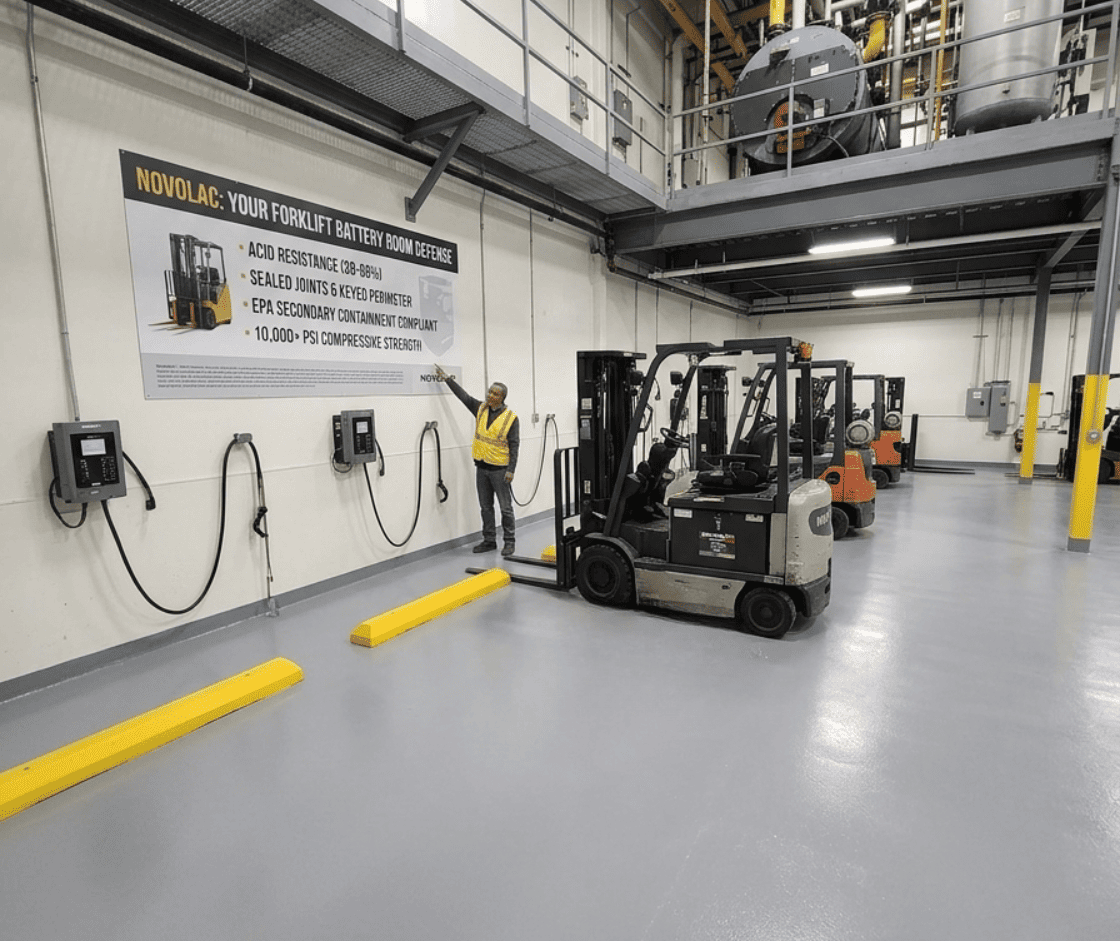
A battery charging station floor faces a threat most warehouse floors never see: concentrated sulfuric acid. Every lead-acid battery in your forklift fleet carries it. When batteries leak, drip, or off-gas during active charging cycles, that acid contacts your concrete. Standard coatings soften and separate. Unprotected concrete pits and erodes — and once the process starts, it doesn’t stop on its own.
Ours don’t fail.
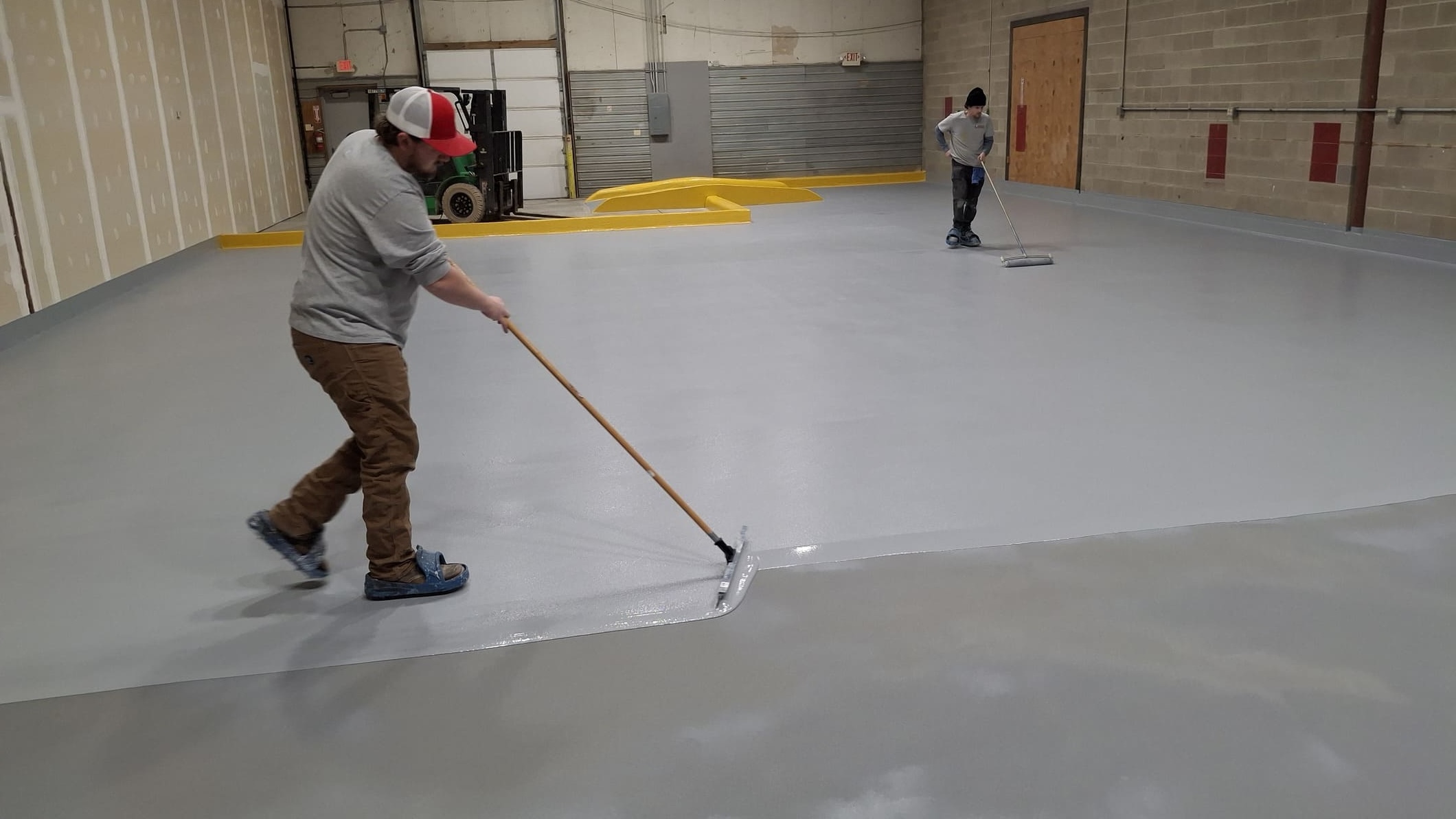
At Columbus Epoxy Flooring, we install Novolac epoxy flooring systems — the industry-specified coating for battery rooms, secondary containment areas, and any environment where chemical exposure is a certainty, not a possibility. We don’t install standard epoxy kits or thin-mil coatings that can’t handle acid submersion. We install real, dense, chemically-resistant systems applied by a crew that understands what’s actually at stake in these environments.
If you need a quote for your charging station, reach out. We’ll come out, walk the area with your team, and put together a straightforward, honest proposal.
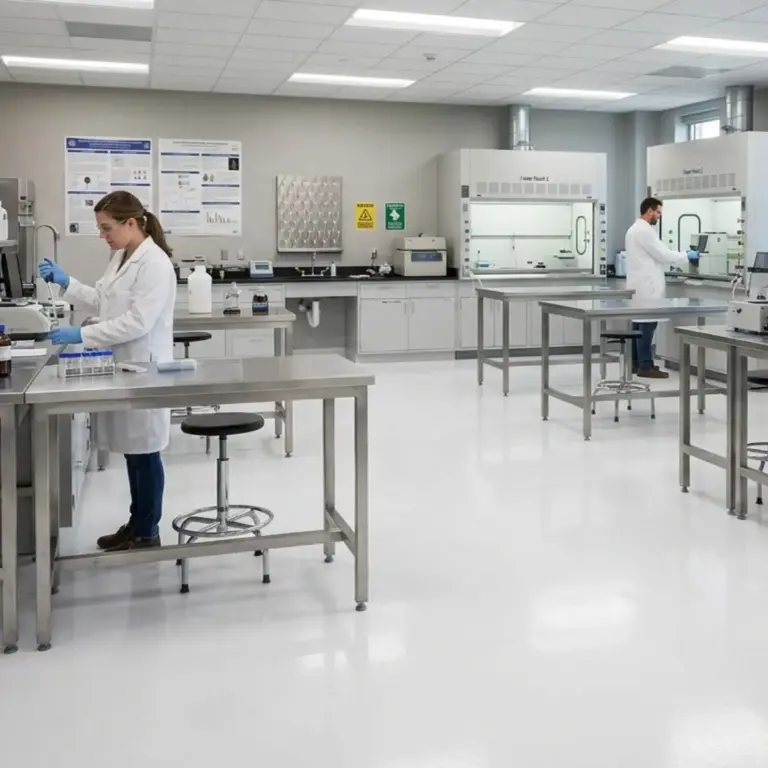
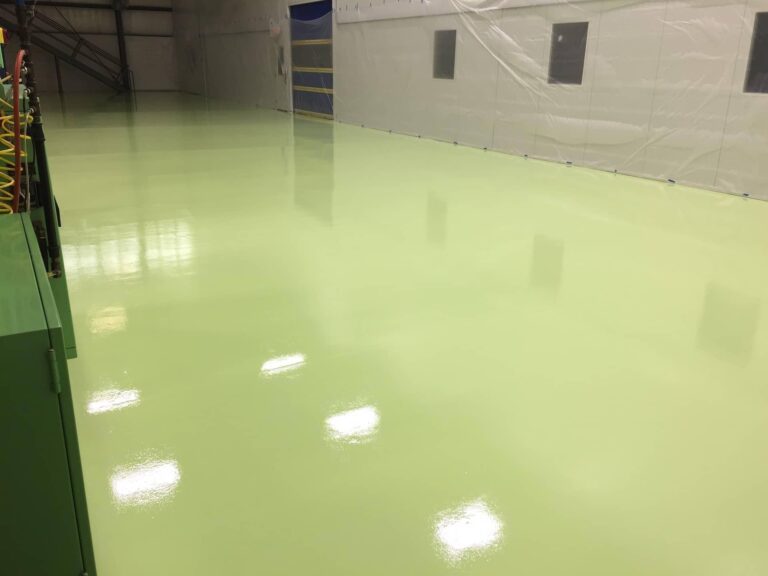
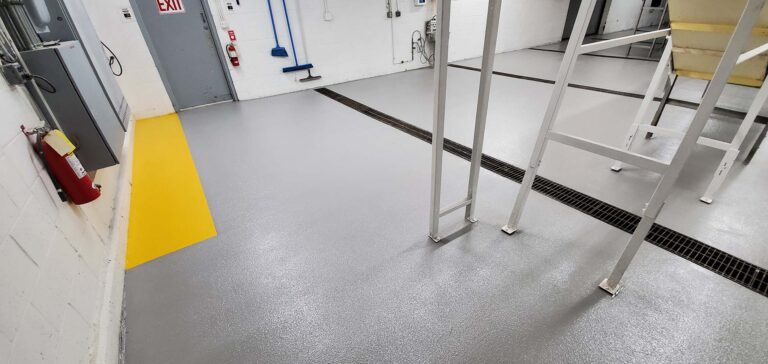
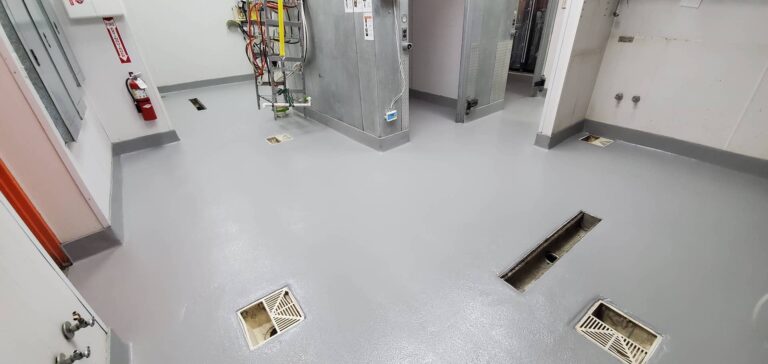
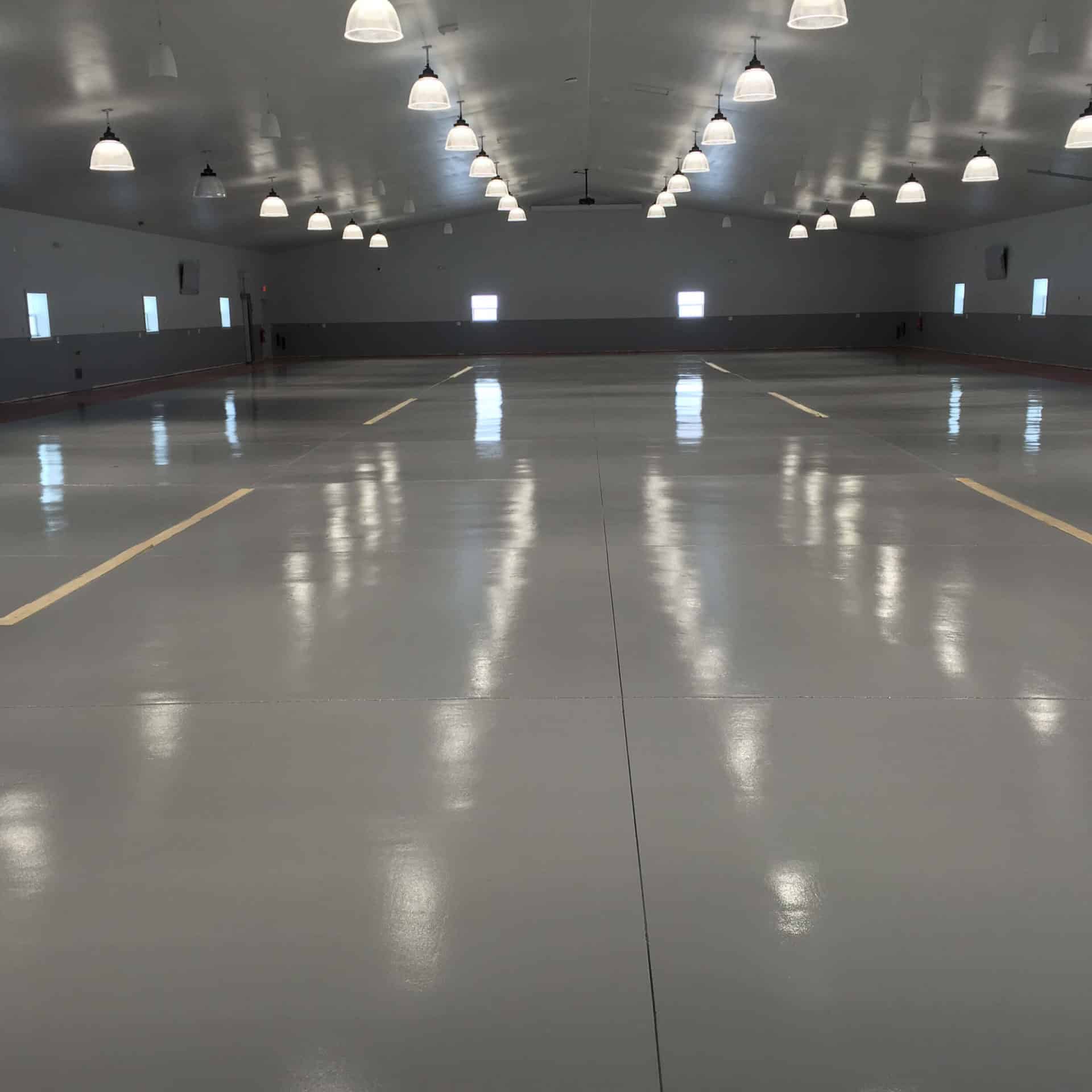
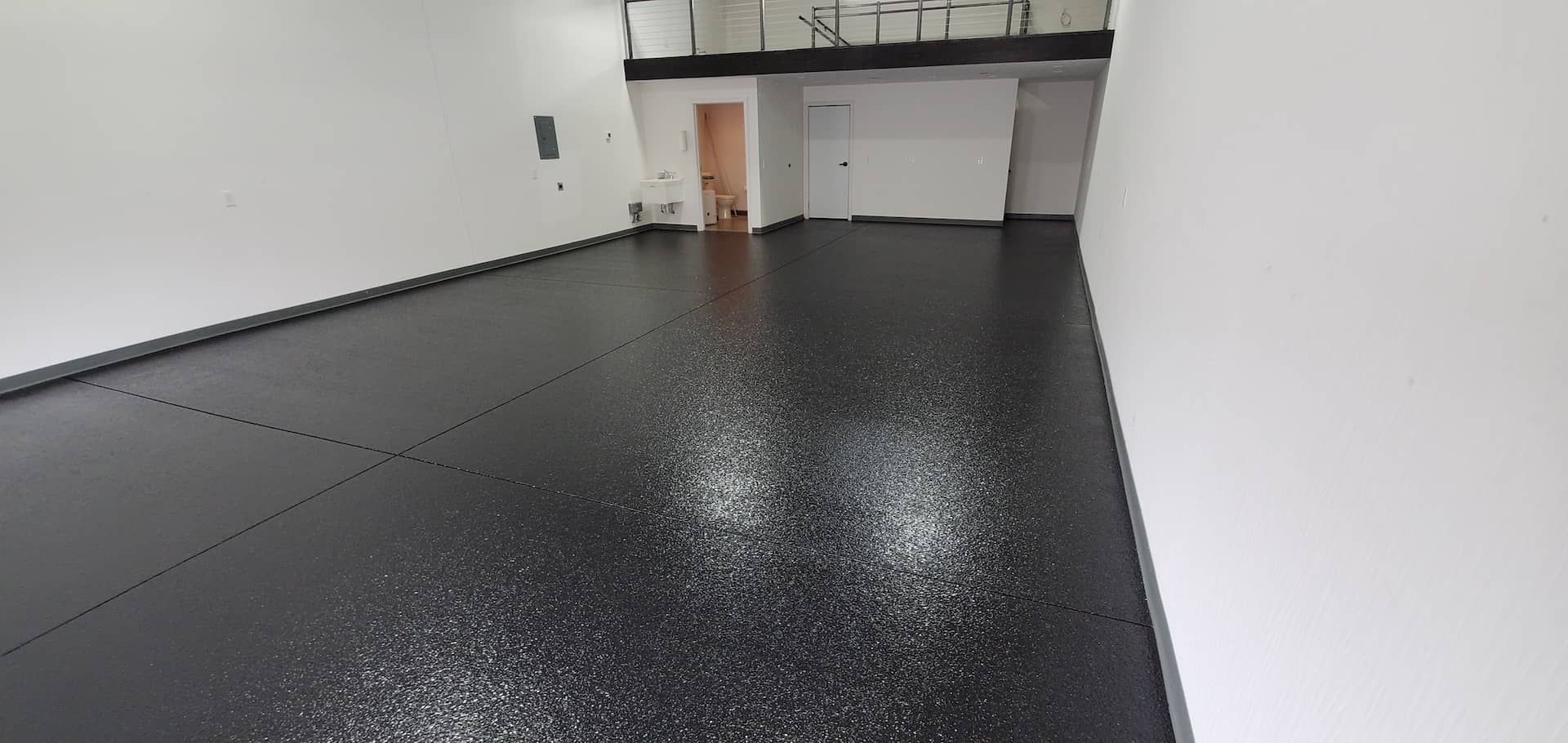
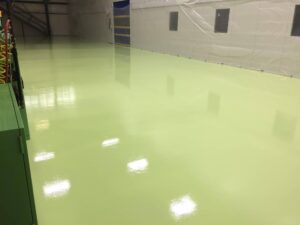
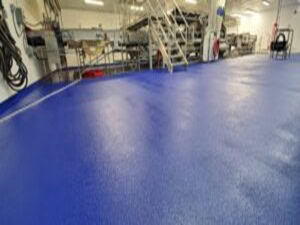
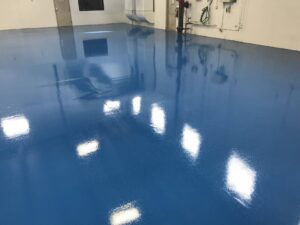
Battery Charging Station Epoxy Flooring Installation Image Gallery
Why Battery Charging Areas Require Novolac — Not Standard Epoxy
A forklift battery room isn’t a typical industrial floor. It’s a 24/7 chemical containment zone that must protect your concrete, your operations, and your EPA compliance simultaneously. Standard epoxy fails in these environments because it isn’t built for:
- High-Concentration Sulfuric Acid: Lead-acid forklift batteries carry 30–50% sulfuric acid electrolyte. A minor battery drip can begin eroding unprotected concrete within weeks, and the damage compounds silently beneath any coating that doesn’t chemically resist it.
- Acid Misting During Active Charging: Charging cycles produce hydrogen gas and acid mist that settle across the entire floor surface. Over time, this mist works into any porous or compromised coating and attacks the concrete below.
- Continuous Steel-Wheel Forklift Traffic: Forklifts entering and exiting a charging area every shift apply extreme point-load and edge stress. Thin-mil and standard epoxy coatings crack, peel, and delaminate at the perimeter — exactly where acid is most concentrated.
- Unsealed Expansion Joints: Standard coatings stop at the joint. Acid doesn’t. It tracks into every unsealed joint and works down to the sub-slab, causing invisible structural damage that only becomes obvious when it’s a costly repair.
- EPA Secondary Containment Requirements: Facilities with lead-acid forklift battery charging areas are subject to EPA regulations for corrosive electrolyte containment. An uncoated or improperly coated floor typically does not meet these requirements.
A standard coating may hold for a year. Once acid gets under a corner or into a joint, you’re looking at a full tear-out that was never in the budget. We install the correct system the first time.
The Right Epoxy System for Your Battery Charging Station
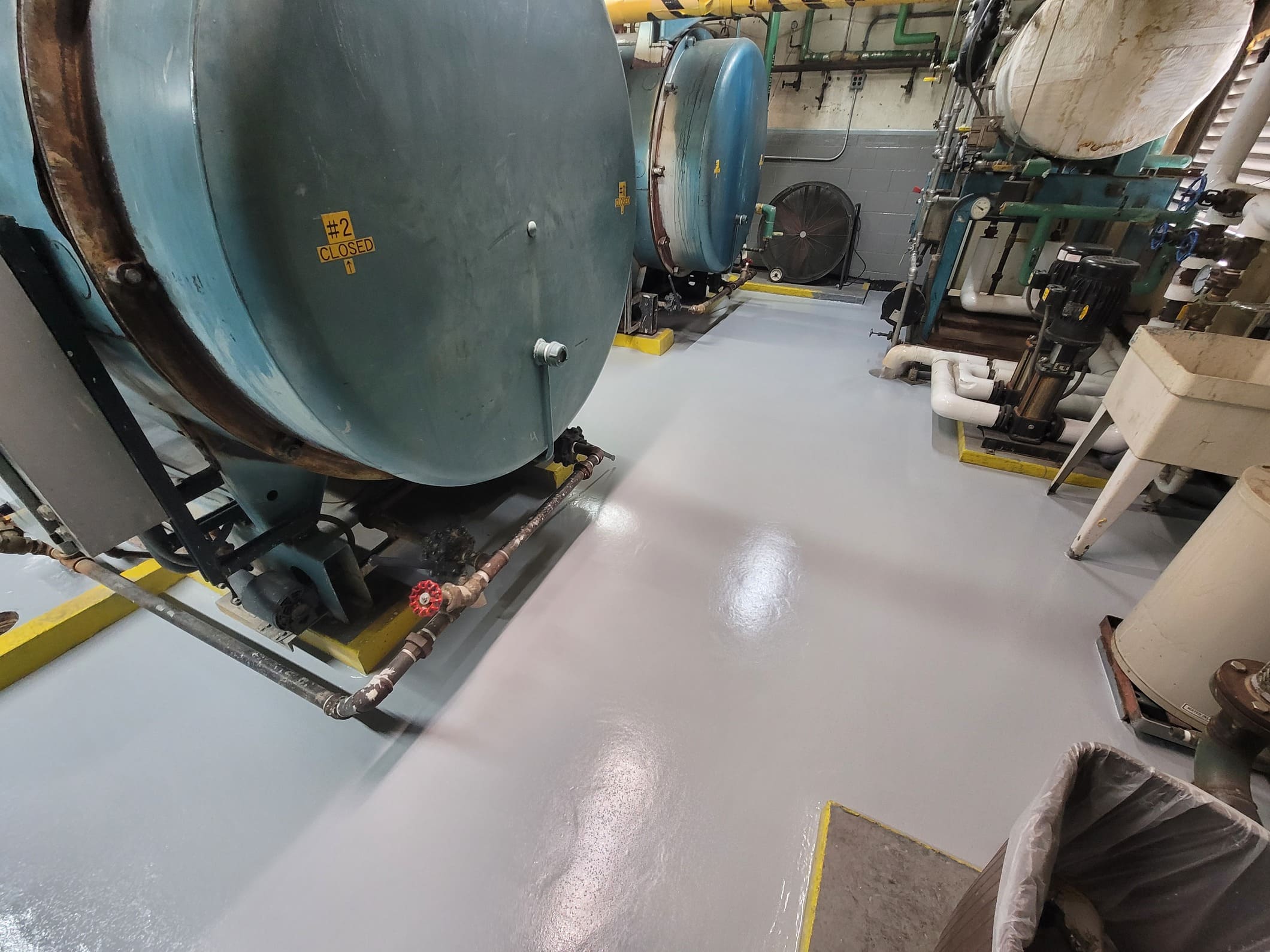
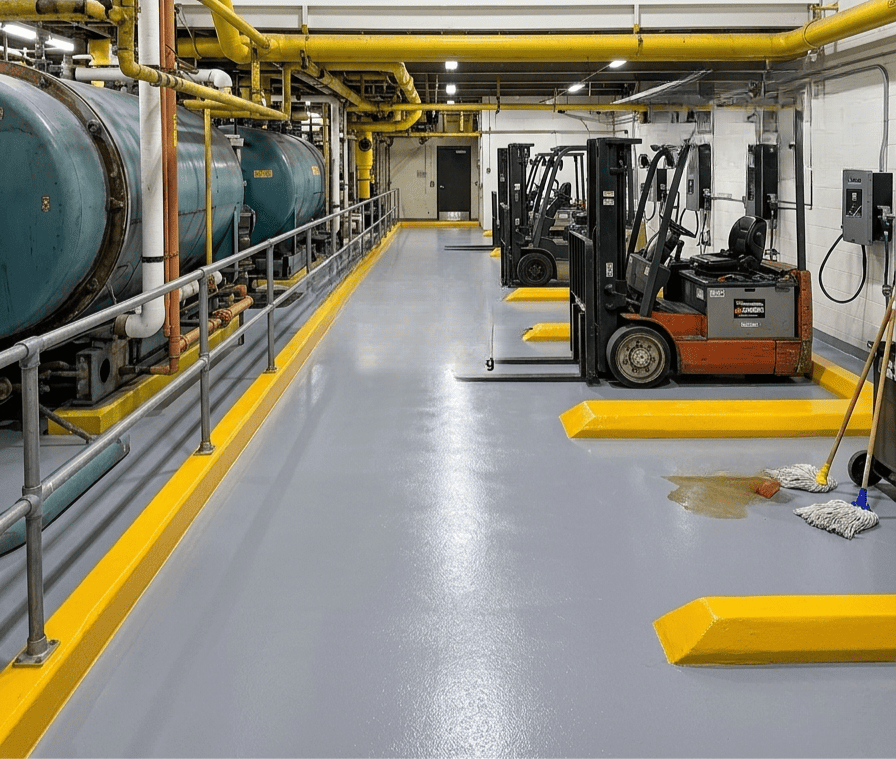
Main Charging Bay Floor: Novolac Epoxy System
For the primary charging floor, Novolac epoxy is the only appropriate specification. Standard epoxy is not a substitute in this area.
- Chemical Resistance: Novolac epoxy has a highly cross-linked molecular structure that provides superior resistance to sulfuric acid, preventing acid penetration and protecting the concrete substrate.
- Mechanical Strength: Its exceptional compressive strength withstands steel-wheeled forklifts, battery handling equipment, and heavy industrial traffic without cracking, lifting, or delaminating.
- Long Service Life: When properly installed, Novolac epoxy systems can perform for 10 to 15+ years in battery charging environments, significantly outlasting standard industrial epoxy coatings.
Expansion Joints & Perimeter Edges: Sealed and Keyed
Joints are the most common failure point in battery room flooring, which is why they are treated as a critical part of every installation.
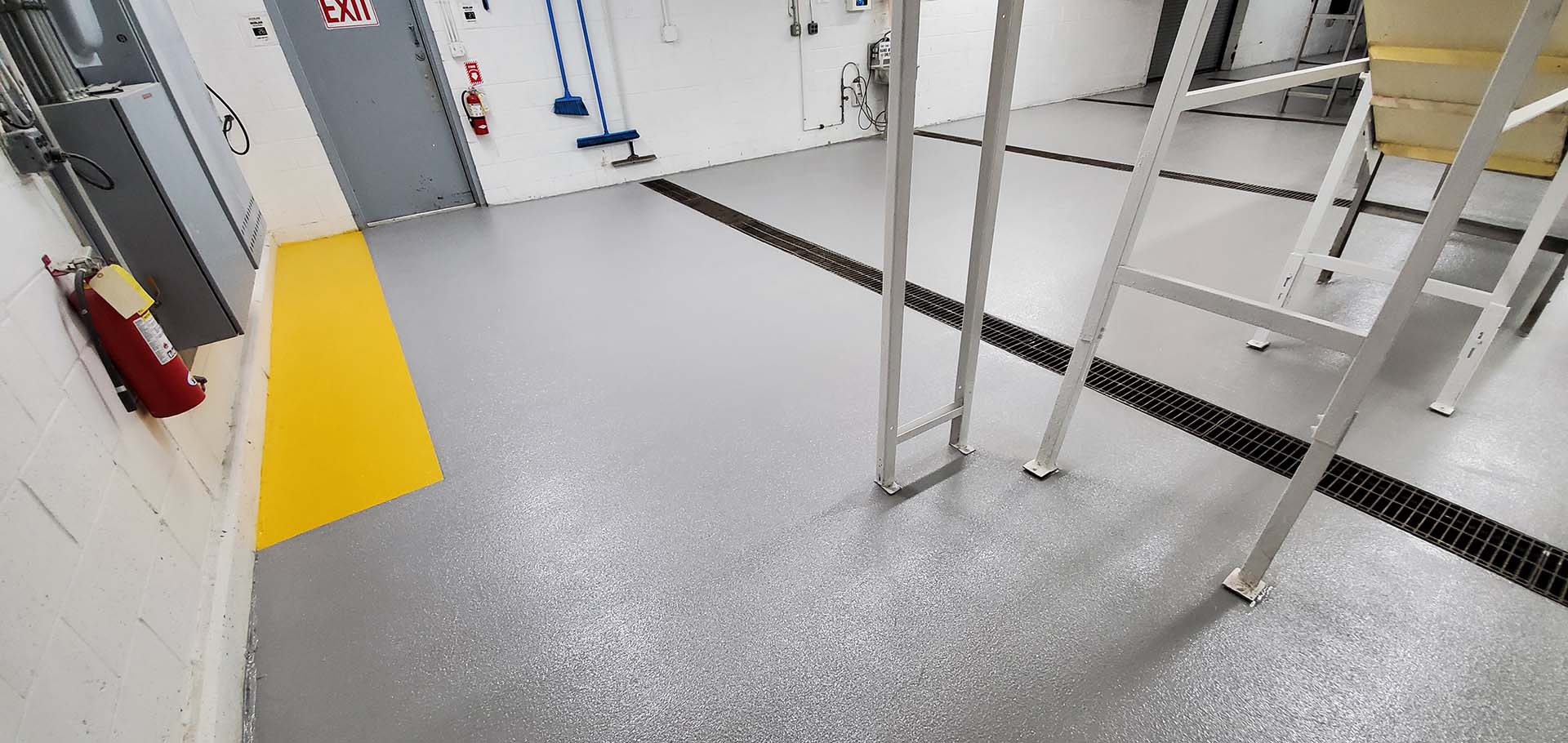
- Joint Sealing: All expansion joints are sealed with a chemical-resistant, flexible sealant designed to withstand acid exposure. This prevents chemicals from penetrating through the joints and reaching the concrete below.
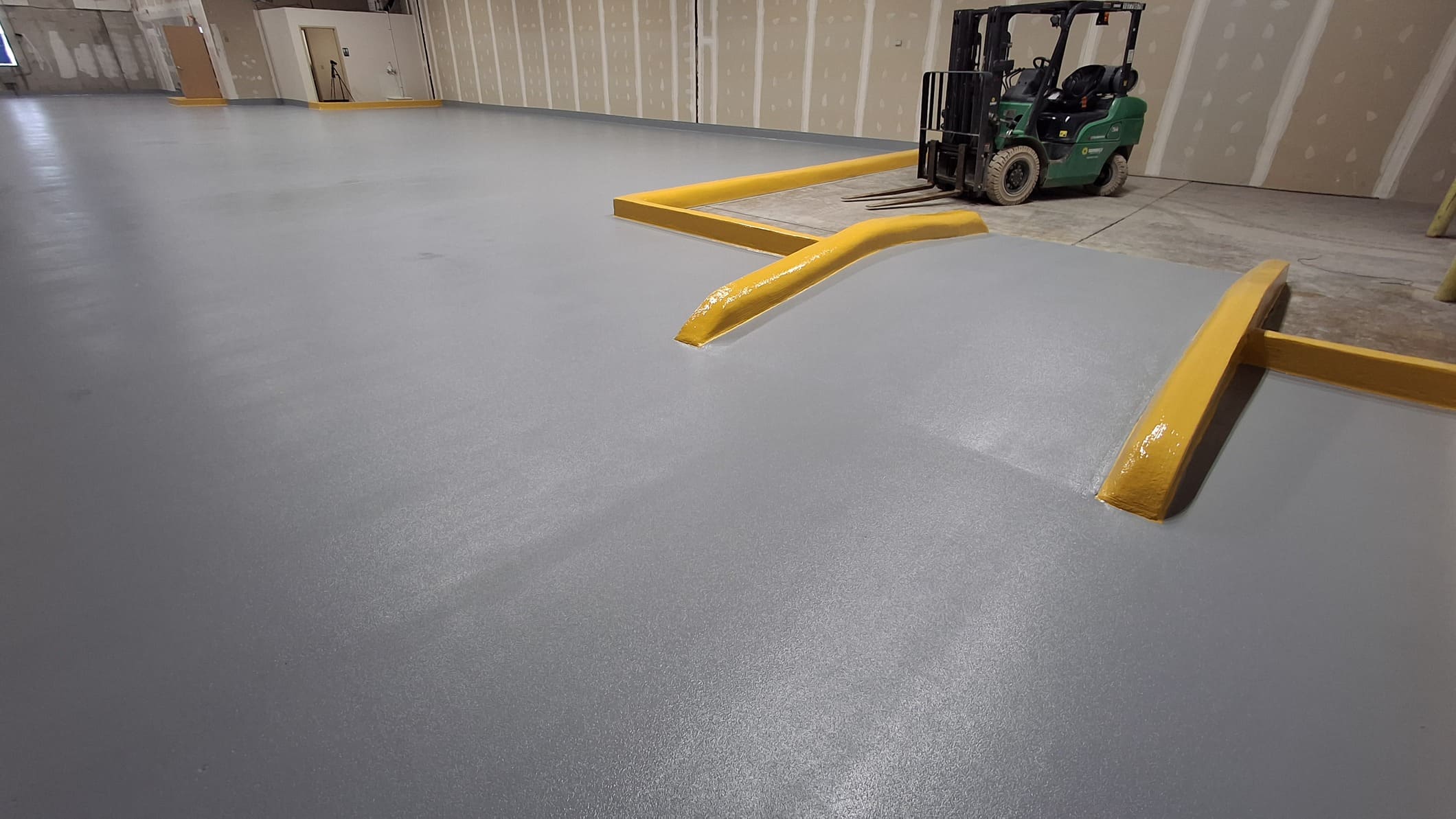
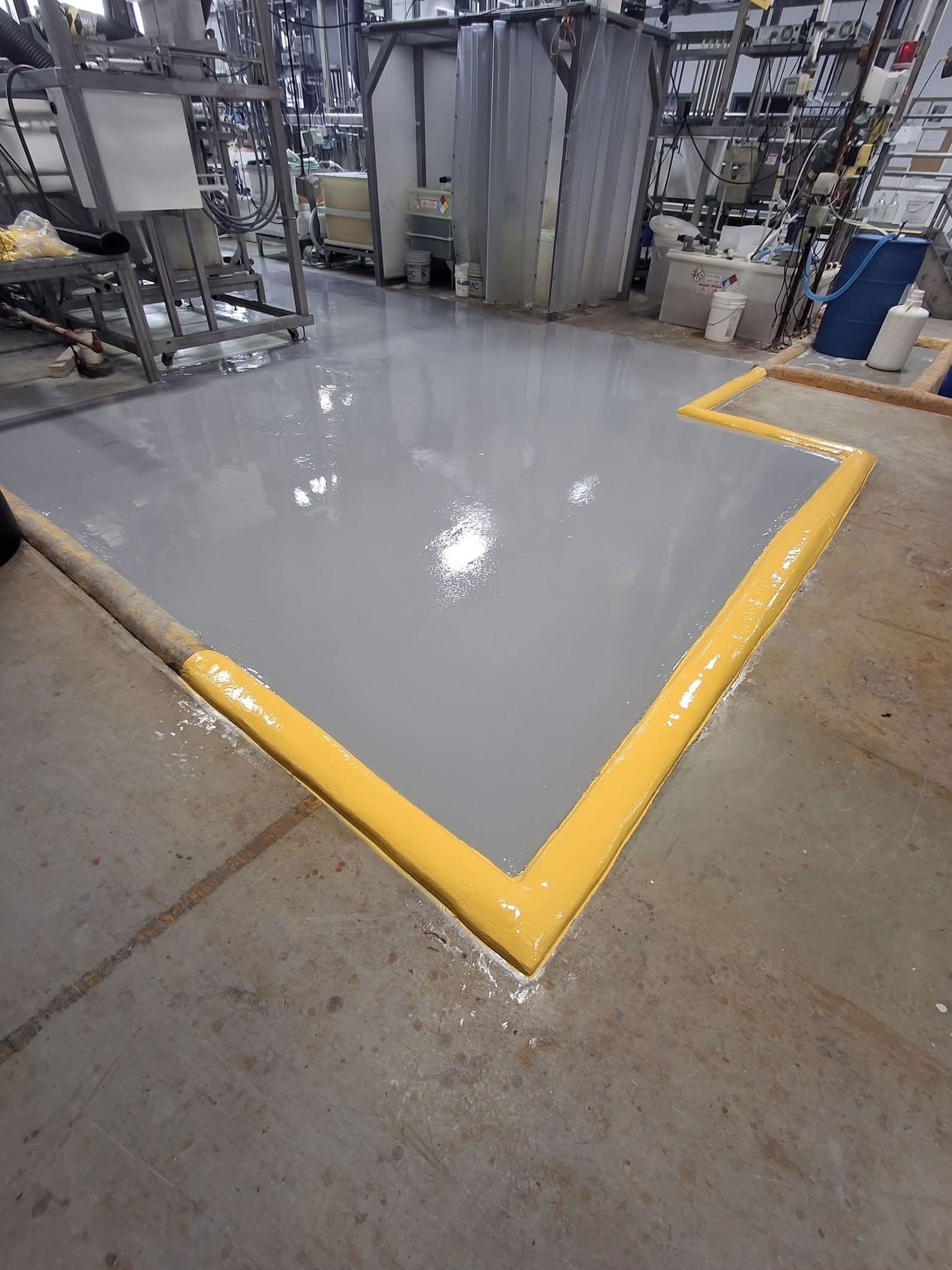
- Perimeter Keying: The floor perimeter is mechanically keyed to create a permanent anchor for the coating system at wall transitions. This helps prevent edge failure and coating separation in areas exposed to frequent forklift traffic.
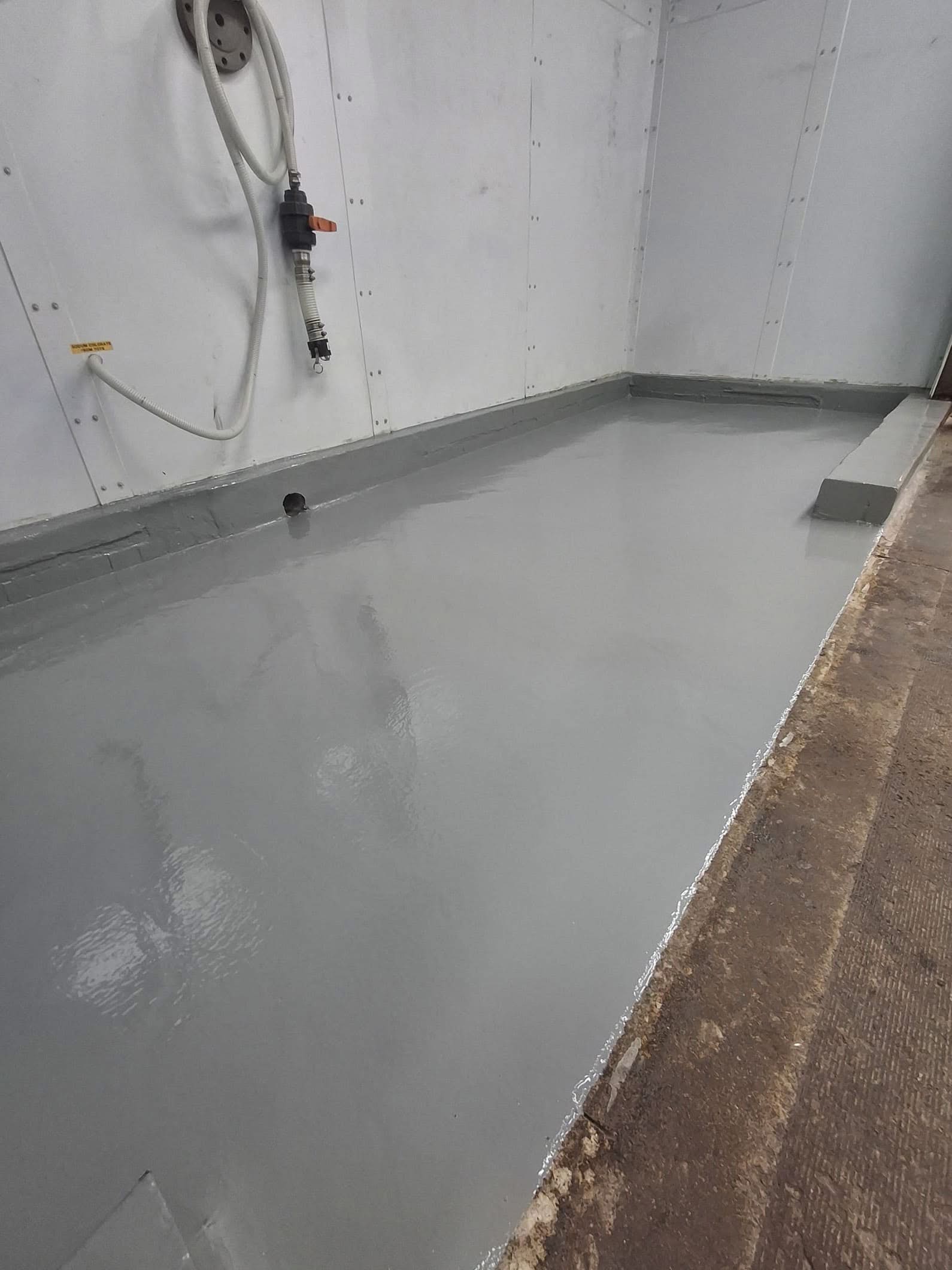
Secondary Containment Zones & Drip Areas: Novolac with Integral Coved Base
For curbed containment areas and active drip zones, we often install an integral coved base — the floor coating curves 4 to 6 inches up the wall. This eliminates the 90-degree corner where acid pools and concentrates, and ensures the containment area functions as a true sealed vessel that meets EPA requirements.
What You Actually Get
Chemical & Acid Protection
- Novolac epoxy system designed to resist sulfuric acid exposure, including high-concentration battery acid environments.
- Sealed expansion joints and mechanically keyed perimeters help prevent acid infiltration beneath the floor.
- Provides a containment surface suitable for battery charging and electrolyte handling areas.
Structural Durability
- High compressive strength supports daily forklift traffic, battery handling equipment, and industrial operations.
- Resistant to cracking, delamination, and edge failure under heavy use.
- Existing cracks and surface imperfections are repaired and stabilized before coating installation.
Safety & Compliance
- Designed to support secondary containment requirements in battery room environments.
- Non-porous surface helps eliminate acid-trapping cracks and voids.
- Optional anti-slip aggregate available for enhanced traction in high-traffic areas.
Easy Maintenance
- Seamless surface eliminates gaps where acid, dirt, and debris can accumulate.
- Resistant to common industrial cleaners, degreasers, and neutralizing solutions.
- Low-maintenance system that does not require routine waxing or stripping.
Technical Specifications & Performance Data
Every proposal includes documented performance specifications and measurable testing data. Our Novolac epoxy systems are designed to meet the following standards:
- Compressive Strength (ASTM D695): 8,000–10,000+ PSI
- Tensile Strength (ASTM D638): 2,000+ PSI
- Hardness (ASTM D2240): 80+ Shore D
- Adhesion (ASTM D4541): 350–400 PSI, with bond strength that can exceed the concrete substrate itself
- Chemical Resistance: Resistant to sulfuric acid, industrial solvents, and harsh cleaning agents commonly found in battery charging environments
- Compliance: Designed to support EPA secondary containment requirements and OSHA standards for corrosive chemical work areas
The Installation Process: Why Surface Preparation Is Everything

We grind the entire floor surface to remove laitance — the weak top layer of concrete — and achieve a Concrete Surface Profile (CSP) of 3 or higher. This creates the mechanical bond the Novolac system requires to hold.

Slabs with elevated Moisture Vapor Emission Rates (MVER) will blister any coating from below. We test every slab and apply a moisture-mitigating primer where needed before any coating goes down.
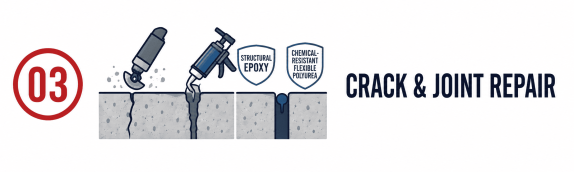
We don't paint over cracks. We chase them out, fill them with structural epoxy, and seal all expansion joints with chemical-resistant flexible polyurea — keeping the system seamless while accommodating building movement.
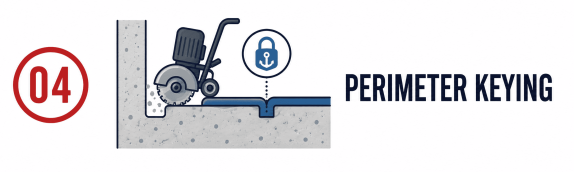
We mechanically key out the perimeter so the coating has a permanent anchor at every wall transition. This is the step that prevents edge delamination under years of forklift loading.
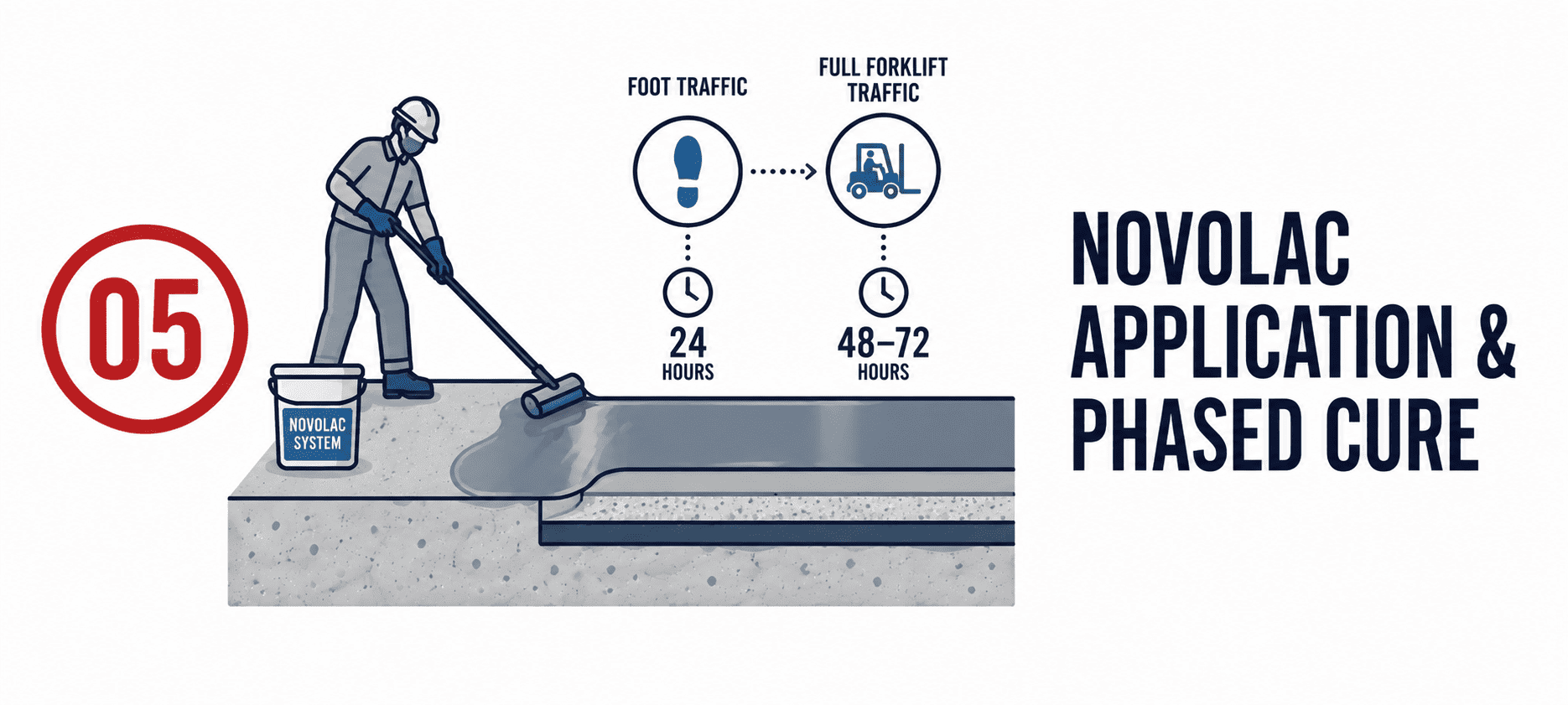
We apply the Novolac system in coordinated phases to minimize facility downtime. Most installations support foot traffic within 24 hours and full forklift traffic within 48 to 72 hours.
- Mechanical Preparation: We use planetary diamond grinders or shot-blasters to remove “laitance” (the weak top layer of concrete) and achieve a Concrete Surface Profile (CSP) of 3 or 4. This ensures a strong mechanical bond.
- Moisture Testing: Ohio slabs often have high Moisture Vapor Emission Rates (MVER). We test every slab. If moisture levels are elevated, we apply a moisture-mitigating primer to stop future blistering.
- Joint and Crack Repair: We don’t just “paint over” cracks. We chase them out, fill them with structural epoxy, and treat expansion joints with flexible polyurea to keep the floor seamless while accommodating building movement.
- Phased Implementation: We know the station can’t simply shut down. We often work in phases, completing one bay at a time. This allows us to shift apparatus and keep the station running. Most systems can handle foot traffic in 24 hours and heavy vehicle traffic in 48 to 72 hours.

Why Central Ohio Facilities Choose Columbus Epoxy Flooring for Their Battery Rooms
Battery room flooring is a specialty installation. Most general epoxy contractors don’t stock Novolac, don’t understand EPA secondary containment requirements, and aren’t experienced with the specific surface preparation that chemically aggressive environments demand.
We are.
We’ve worked in manufacturing plants, distribution centers, fleet maintenance facilities, and industrial operations across [Region]. We understand what a forklift battery room goes through on a daily basis — and we install the system that’s actually rated for it. We won’t oversell you a coating you don’t need, and we won’t undersell you one that will fail.
We back every installation with a written warranty and a proposal that includes the specific performance data for the system we specify.
Serving Fire Departments Across Central Ohio
We offer installation services for fire departments and EMS agencies throughout Franklin, Delaware, Licking, and Fairfield counties, including Dublin, Westerville, Hilliard, Grove City, New Albany, Powell, Reynoldsburg, and the Greater Columbus area.
Ready to Protect Your Battery Charging Station Floor?
Industrial-Strength Novolac. Proper Prep. No Shortcuts.
Your battery room floor is taking on acid every day it runs. The right coating — installed correctly — is the difference between a floor that lasts 15 years and one that needs full replacement in 18 months.
To schedule an on-site evaluation and receive a technical proposal for your facility, contact us directly. We’ll walk the space, assess your concrete, and give you an honest recommendation — including whether your existing floor can be saved or needs to come out first.
Frequently Asked Questions
Can you coat over my existing floor, or does it need to be removed first?
It depends on the condition of the existing concrete. If the slab is sound and uncontaminated, we can grind and apply directly. If acid has already penetrated and compromised the substrate, we assess the depth of damage before recommending anything. We’ll give you a straight answer during the site visit. We won’t coat over a problem and call it done.
How long will installation take?
Most battery charging station floors are completed in 2 to 4 days, depending on square footage and concrete condition. Where possible, we work in phases so your operation can continue running around us. Forklift traffic is typically cleared for return within 48 to 72 hours after application.
Is Novolac actually required, or will standard epoxy work?
For battery rooms with lead-acid forklift batteries, Novolac is the correct specification. Standard epoxy does not have the chemical resistance required to withstand concentrated sulfuric acid. We do not install standard epoxy in battery rooms because it will not provide long-term performance. If a contractor recommends standard epoxy for this application, ask what acid concentration it is rated to withstand.
Does this floor help with EPA compliance?
Yes. A properly installed Novolac system with sealed expansion joints, and an integral coved base where applicable, can qualify as secondary containment under EPA regulations for corrosive electrolyte. During the site visit, we can review your facility layout and explain the specific requirements that apply to your operation.
What happens if a battery leaks onto the finished floor?
The Novolac coating contains the spill at the surface. Simply neutralize the acid with a standard baking soda solution, clean it up, and resume operations. The floor is designed to resist damage from battery acid exposure, which is exactly why Novolac is specified instead of a general industrial coating.